Menü

Lemna minor

Common Duckweed

°C
°dKH
Aquarium suitability: yes
Difficulty: very easy
Growth: very fast
See also: Landoltia punctata , Lemna spp.
Range and localities [?]: 

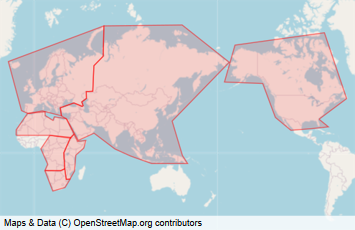
Temperate zone, almost cosmopolitan


Availability [?]: 
  • frequently available commercially
  • frequently available from other aquarists

Common names [?]: 
  • Common Duckweed

Habit, plant type [?]:

  • free-floating (surface)
Botanical name [?]: Lémna mínor L.

Major group (unranked) [?]: Seed plants: Flowering plants (Angiosperms)
Order [?]: Alismatales
Family [?]: Araceae
Genus [?]: Lemna

Description: 

The common duckweed (Lemna minor) is the most common and best-known duckweed species in Europe. It occurs mainly in the northern hemisphere (North America, Europe, Asia), but also in the southern hemisphere, including Australia and New Zealand. L. minor often grows in masses on the surface of nutrient-rich, muddy, standing and slowly flowing waters such as pools, ponds, small lakes and ditches. The “duckweed” carpet can become several centimetres thick. The common duckweed often occurs together with other duckweeds such as Spirodela polyrhiza or the submersed Lemna trisulca, which floats beneath the duckweed cover. Similar species that occur wild in Central Europe are the gibbous duckweed (Lemna gibba), the red duckweed (L. turionifera) and the least duckweed (L. minuta).

Duckweeds in aquariums are mostly called Lemna minor. However, they may also be other Lemna species, some of them introduced from the tropics, such as Lemna aequinoctialis. L. minuta and L. valdiviana. The dotted duckweed (Landoltia punctata) also frequently turns up in aquariums and is mistaken for Lemna minor. Identifying duckweed species is often very difficult. All Lemna species have one root per frond. In this the genus Lemna differs from Landoltia and Spirodela (a tuft of several roots per frond) and from Wolffia and Wolffiella (rootless).

Some characteristics of L. minor:

  • fronds flattened (not thickened as in Lemna gibba), with a roundish to elliptic-obovate outline, 2 to 4 mm long,
  • upper surface smooth, without a row of bumps or a ridge in the middle (as in some other Lemna species),
  • three veins are visible in transmitted light (Lemna minuta, e.g., has only one vein).

For further information on duckweeds as aquarium plants see Lemna spp.

References and further reading:
  1. Wayne Armstrong's On-line description of Lemna minor (Lemnaceae) (http://waynesword.palomar.edu/lemi.htm, accessed 20 May 2013)
Light low to high 
Temperature tolerance 4 to 30 °C
Carbonate hardness 2 to 30 °dKH
pH value 5 to 9 
Carbon dioxide (CO2) 0 to 40 mg/l
Nitrate (NO3-) 10 to 50 mg/l
Phosphate (PO43-) 0.1 to 3 mg/l
Potassium (K+) 5 to 30 mg/l
Iron (Fe) 0.01 to 0.5 mg/l

Growth: very fast

Propagation: Fragmentation

Can grow emersed?: yes

Suited for outdoor cultivation / ponds [?]: yes

Winter hardiness [?]: hardy in Germany

There is no detailled information for cultivating this plant yet.
There are no further design information for this plant yet.
There are no images in this gallery.
You can embed this entry directly into another web site or forum. Just copy and paste the following code:

Embed as HTML code

<a href="https://www.flowgrow.de/db/aquaticplants/lemna-minor" target="_blank"><img alt="Lemna minor" title="Lemna minor" src="https://www.flowgrow.de/db/widget/aquaticplants/lemna-minor" /></a>

Embed as BB code

[url=https://www.flowgrow.de/db/aquaticplants/lemna-minor][img]https://www.flowgrow.de/db/widget/aquaticplants/lemna-minor[/img][/url]

Embed in Flogrow Forum

[widget=aquaticplants/lemna-minor]Lemna minor[/widget]

Preview

There are no reviews so far. Do you want to write the first one?
TODO Lemna minor is also known as Common Duckweed. TODO

Wasserpflanzen sind ein fester Bestandteil der meisten Aquarien. Beim Aquascaping, dem Naturaquarium, Biotop-Aquarium oder dem Gesellschaftsaquarium sind Wasserpflanzen nicht nur für die Wasserqualität entscheidend, sondern sorgen auch stets für eine optische Aufwertung des Aquariums.