
 Range and localities [?]:
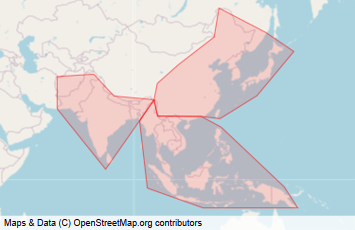
 widespread in tropical and subtropical Asia: India and South Japan to New Guinea
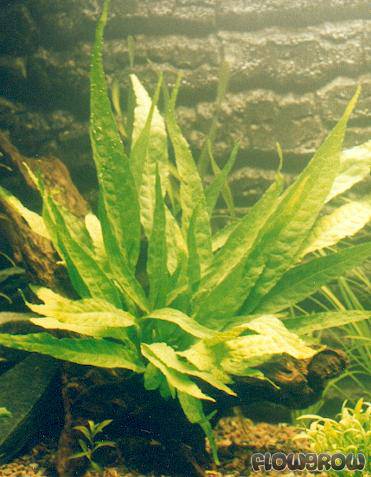
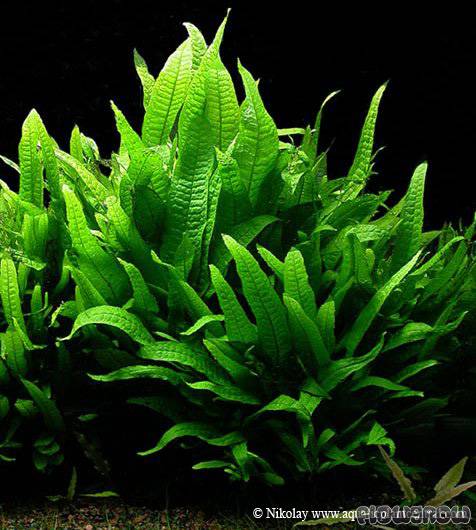
Microsorum pteropus, or Java fern, grows in innumerable locations in tropical and subtropical regions of Asia. It is often found on rocks or wood in rivulets and waterfalls. Some populations grow submersed permanently, others occur as terrestrial plants on moist forest ground.
Java fern is a very widely spread, popular plant in the aquarium hobby, and it is on sale in most aquarium shops. 50 years ago it was brought into trade under the erroneous name Leptochilus decurrens, amongst others, which is not a synonym for M. pteropus, but the name of another fern.
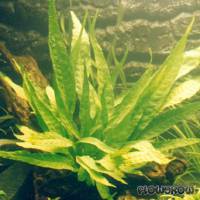
M. pteropus is very variable. The various forms can differ so much in size and leaf form that one might even assume they belong to different species. For quite some time, only the large-growing standard form with broad leaves used to be in cultivation, however, more recently, other forms beside the varieties 'Tropica' and 'Windelov' have been imported, a large range of predominantly smaller-growing and narrow-leaved Java fern varieties.
M. pteropus is one the easiest aquarium plants hitherto in cultivation and thus the perfect plant for beginning planted aquarium keepers. Its low demands and the possibility to cultivate it as an epiphyte on rocks and wood made it a firm asset in the aquarium hobby. Moderate light is more than sufficient, Java fern grows well under stronger and weaker lighting as well. Like Anubias, Microsorum pteropus develops a creeping rhizome on which the roots and leaves grow. This rhizome can be fixed to roots or driftwood with string, and after a few months it attaches to these surfaces with its roots. This plant can also be attached to the back or the side glass of the tank with suckers. In breeding tanks, M. pteropus is often used as floating plant, together with Java moss.
If you want to plant M. pteropus in the substrate, make sure you only cover the roots, not the rhizome, as it would rot away. The plant can also be fixed on the ground with plant needles or weighed down with rocks without covering the roots at all.
M. pteropus does not require the addition of fertiliser or CO2, however, moving water is highly beneficial. It can very easily be cultivated emersed in terraria or paludaria, as long as the substrate is kept moist.
Propagation is easiest done by cutting the rhizome apart with a sharp knife or pair of scissors. It can also be broken in two quite easily. In addition, Microsorum pteropus forms daughter plants on the underside and on the tips of its leaves frequently, and also - though less often - on its roots. The development of these daughter plants can be furthered by cutting them off the mother plant and/or by snapping the midrib. Should you plan to let these daughter plants grow on driftwood or rocks, you can just fix "mother leaves" to them with string.
If you leave the daugther plants on the mother plant, in time, a lush population of several plant generations may form on top of each other, which provides fish with a large number of hideaways and territories in its dense foliage and dark tangled roots.
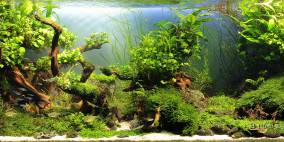
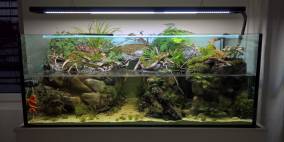
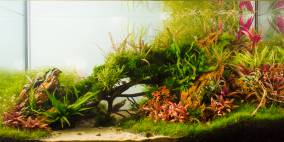
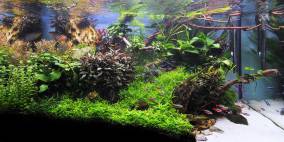
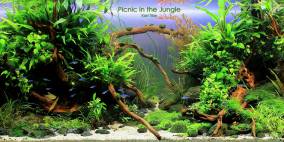
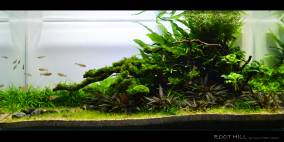
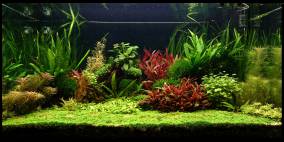
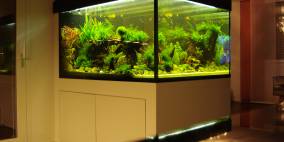
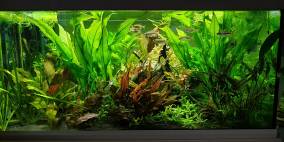
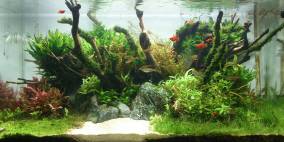
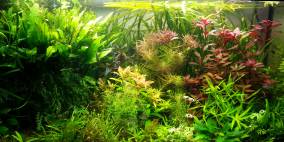
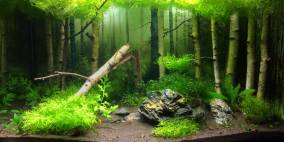
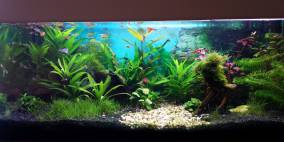
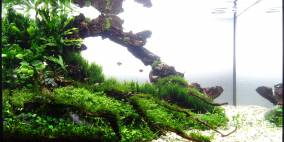
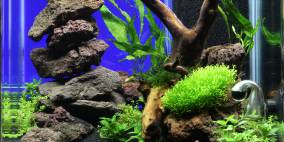
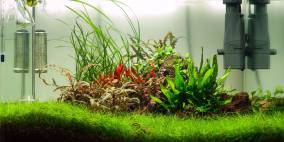
Its ability to grow in places in the aquarium where other plants cannot take root, Java fern provides the aquascaper with many design options. It is especially striking when planted on a piece of driftwood in the middle- or background of a tank.
M. pteropus is one of the easiest aquarium plants to keep and therefore a perfect beginner's plant. Its easy care and the possibility of cultivating it on stones and roots have made it a fixture in the aquarium hobby. Moderate light intensity is entirely sufficient; Java fern also grows well under weaker or stronger light. Like Anubias barteri, Microsorum pteropus forms a creeping rhizome on which the roots and leaves sit. This rhizome can be tied to stones or driftwood and attaches itself firmly with its roots after a few months. The plant can, e.g., also be fixed to the back or side panes with rubber suction cups. In breeding tanks the fern is often used free-floating together with Java moss.
If you want to plant M. pteropus into the substrate, only the roots should be pushed flat into the ground, but not the rhizome, as it could otherwise rot. The plant can also be fixed on the substrate with plant pins or stones without burying the roots.
Java fern can also grow in largely flow-free tanks without fertilisation and CO2 supply. However, a good supply of nutrients and CO2 as well as water movement greatly promote the growth and appearance of the plant and help to prevent the leaves from developing blackish-brown spots, as is otherwise often the case with M. pteropus.
Emersed cultivation of Java fern in humid terrariums and paludariums is very easy as long as the substrate is merely kept moist.
For propagation, the rhizome can be divided by cutting it through with sharp scissors or a knife. It can also simply be broken into pieces. In addition, Microsorum pteropus regularly forms daughter plants on the underside and tip of old leaves and, to a lesser extent, on the roots as well. The development of daughter plants on a leaf can be encouraged by cutting this leaf off the plant and/or bending the leaf midrib. If you want to settle the young plants on driftwood or stones, you can simply tie cut-off “mother leaves” onto these.
If the young plants are left on the mother plant, a lush stand of several plant generations one above the other develops over time (hence the name “tiered fern”), which with its dense foliage and dark tangle of roots offers fish plenty of hiding places and territorial possibilities.
With its ability to grow in places in the aquarium where other plants find no hold, Java fern offers many design possibilities. Microsorum pteropus displays its beauty particularly well on a root in the midground or background of the tank. The visual effect naturally depends greatly on which variant of M. pteropus is used. The very narrow-leaved forms such as 'Narrow', "Needle Leaf" or "Taiwan" suit the nature aquarium style especially well.
<a href="https://www.flowgrow.de/db/aquaticplants/microsorum-pteropus" target="_blank"><img alt="Microsorum pteropus" title="Microsorum pteropus" src="https://www.flowgrow.de/db/widget/aquaticplants/microsorum-pteropus" /></a>
[url=https://www.flowgrow.de/db/aquaticplants/microsorum-pteropus][img]https://www.flowgrow.de/db/widget/aquaticplants/microsorum-pteropus[/img][/url]
[widget=aquaticplants/microsorum-pteropus]Microsorum pteropus[/widget]