


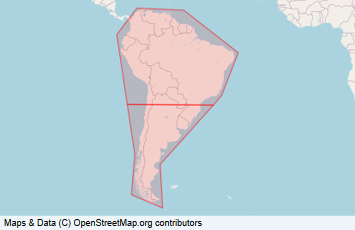
 Range and localities [?]:
Southern South America, introduced in the southern USA


Hedyotis salzmannii is a graceful stem plant from the southern part of South America. In wet, temporarily flooded places such as riverbanks, this plant forms dense, creeping emersed stands, but it can also grow under water. It has also become naturalised in wetlands of the south-eastern USA.
This species is one of the few aquarium plants from the large, predominantly tropical madder family (Rubiaceae). This group of relatives also includes, among others, woodruff (Galium odoratum) and the coffee plant (Coffea).
Hedyotis salzmannii is often also called Oldenlandia salzmannii, and there are different opinions about which of the two names should be accepted. In fact it is still open to which genus this plant will finally be assigned. A DNA analysis (Groeninckx & others (2009)) has shown that the species is more closely related to, for example, Bouvardia, Manettia and Spermacoce than to the true Oldenlandia and Hedyotis species.
In 1993 the plant was introduced from Argentina to Germany by Christel Kasselmann. It was at first provisionally called Rubiaceae sp. “Argentinien” and was later identified by C. M. Taylor (Missouri Botanical Garden) as Hedyotis salzmannii. In the USA this species became known in the hobby no later than 2007 under the mistaken name Bacopa sp. “Pantanal”. After the plant had been brought to flower in emersed culture, it could be identified correctly.
Under the name Hedyotis salzmannii, a bushy-growing form of Bacopa monnieri has recently (around 2010) come onto the market as a supposed novelty. From the true H. salzmannii, B. monnieri can easily be distinguished by its thick, fleshy leaves and stems (see B. monnieri 'Compact'). The true H. salzmannii is obviously a rarity in the hobby and is probably only very rarely, if at all, available commercially.
In the aquarium “Salzmanns Süß-Ohr” (“Salzmann's sweet ear”, a translation of the botanical name) develops upright, relatively thin stems with horizontally spreading, decussate, light green, narrowly ovate leaves.
The emersed form has broadly ovate, unstalked leaves 4-10 mm long and rather prostrate stems. With good lighting, small white to pale pink flowers with 4-5 pointed petals fused to one another at the base appear at the shoot tips.
(For more, see “Culture” and “Design”)
Hedyotis salzmannii is relatively easy to cultivate and prefers soft to medium-hard water at moderate to high light intensity. Like other stem plants, it can be propagated by top and side-shoot cuttings. Striking about this plant is that the shoot tips frequently detach and then drift around in the aquarium.
- To be continued -
Hedyotis salzmannii looks good in the aquarium midground as a group or loose bush and, with its light green colour, contrasts well with dark green or red plants. The visual effect of this graceful plant is determined by the thin, vertical stems and the horizontally spreading leaves.
- To be continued -
<a href="https://www.flowgrow.de/db/aquaticplants/hedyotis-salzmannii" target="_blank"><img alt="Hedyotis salzmannii" title="Hedyotis salzmannii" src="https://www.flowgrow.de/db/widget/aquaticplants/hedyotis-salzmannii" /></a>
[url=https://www.flowgrow.de/db/aquaticplants/hedyotis-salzmannii][img]https://www.flowgrow.de/db/widget/aquaticplants/hedyotis-salzmannii[/img][/url]
[widget=aquaticplants/hedyotis-salzmannii]Hedyotis salzmannii[/widget]
