 Range and localities [?]:
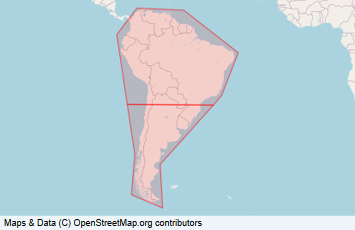
Brazil, Paraguay, Uruguay, Northern Argentina


Egeria najas comes from central and southern South America. It occurs partly in the same area as Egeria densa, but is also distributed further north into the tropical zone of Brazil and Paraguay. As a submerged plant it colonises various waters such as lakes and rivers.
The naiad-like waterweed has not been common as an aquarium plant for as long as the dense-leaved waterweed (E. densa). It is, however, an attractive stem plant that makes virtually no demands on the aquarist and also tolerates more warmth than E. densa.
Scientifically, Egeria najas has been known just as long as E. densa; both species were described in 1849 by J. E. Planchon, who established the genus Egeria. Altogether three Egeria species are distinguished today. The third species is E. heterostemon, which was described in 2001 and is not yet in aquarium cultivation.
The leaves of E. najas stand close together; they are narrower and more distinctly toothed than the leaves of E. densa. The species can possibly be confused with Hydrilla verticillata. For distinguishing between the different waterweed species see the description of Egeria densa.
- To be continued -
(For more see "Culture" and "Design")
The naiad-like waterweed is an undemanding plant. It requires only sufficient light and is content even without added CO2, which is however beneficial and increases its growth rate.
With plenty of light and a balanced nutrient ratio E. najas grows best. It is particularly noteworthy that it is more tolerant of higher temperatures than Egeria densa. It is therefore more to be recommended for tropical aquariums than E. densa.
Thanks to its fast growth it can be used well to combat algae, as it can take up large amounts of nutrients.
E. najas forms many side shoots and can be propagated easily. Side shoots or top cuttings can be cut and planted in the substrate, where they root quickly and shoot up. The trimmed stems, on the other hand, take somewhat longer to form side shoots.
Despite its attractiveness, Egeria najas is difficult to integrate into neat-looking aquarium designs because of its fast growth and its rather untidy growth form. It is, however, a good choice for natural-looking layouts and for plantings intended to provide cover for the fish.
References and further reading:<a href="https://www.flowgrow.de/db/aquaticplants/egeria-najas" target="_blank"><img alt="Egeria najas" title="Egeria najas" src="https://www.flowgrow.de/db/widget/aquaticplants/egeria-najas" /></a>
[url=https://www.flowgrow.de/db/aquaticplants/egeria-najas][img]https://www.flowgrow.de/db/widget/aquaticplants/egeria-najas[/img][/url]
[widget=aquaticplants/egeria-najas]Egeria najas[/widget]