
 Range and localities [?]:
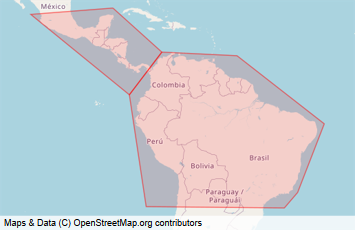
 Tropical America: Mexico to northern Argentina
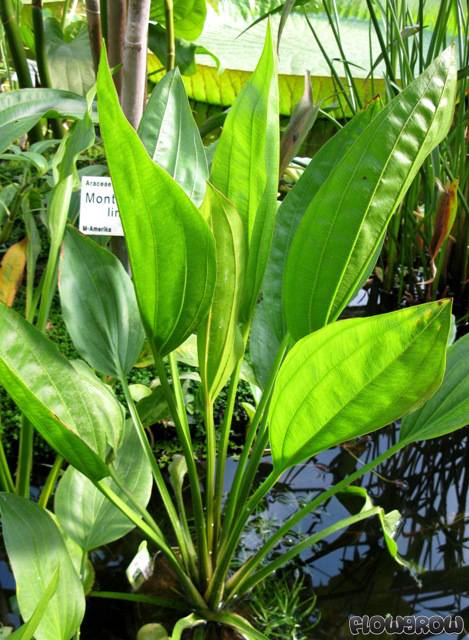
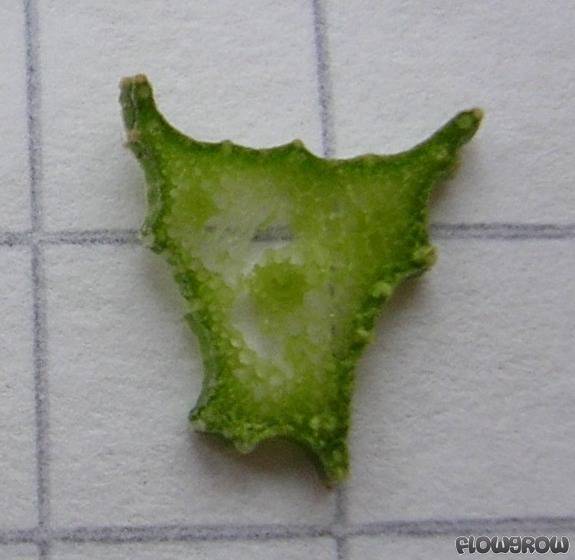
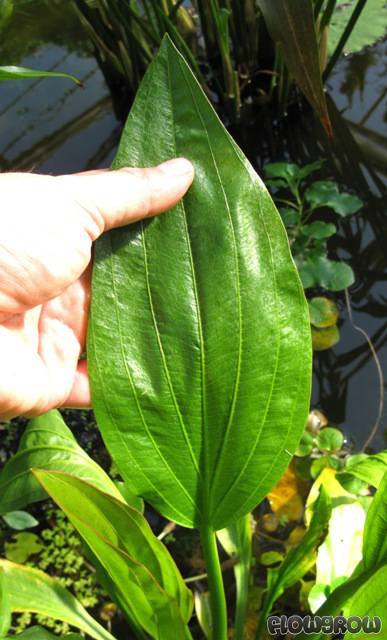
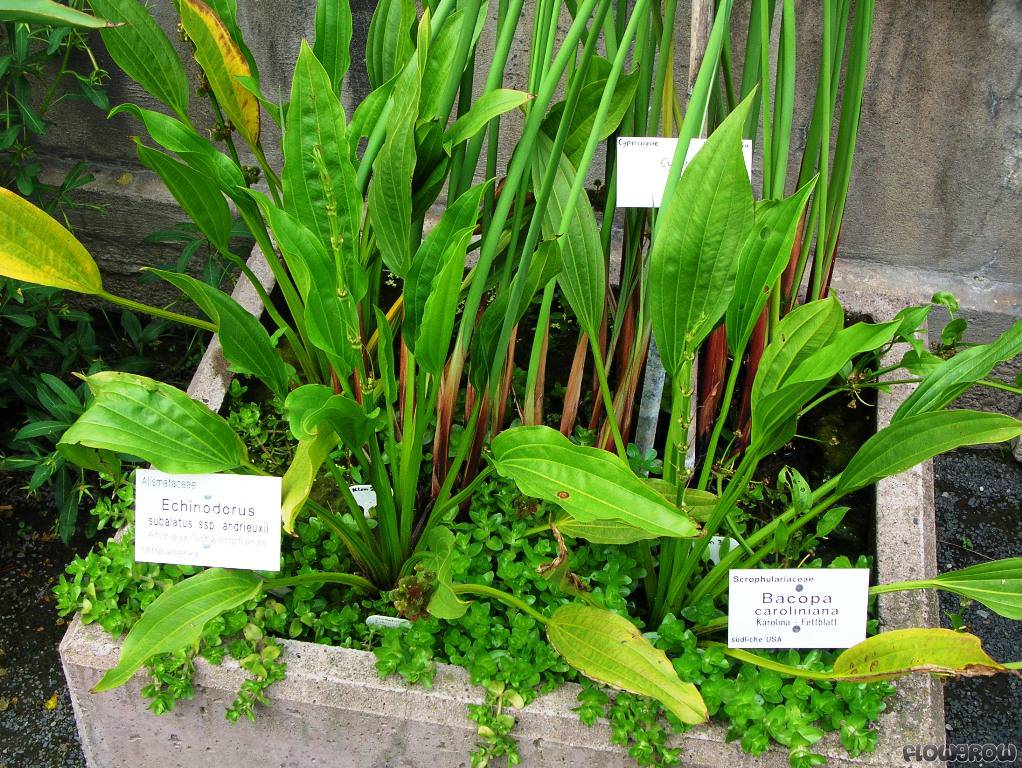
Echinodorus subalatus is quite widely distributed in the tropical regions of America, found in bogs and on riverbanks and lakeshores, temporary ponds and flood plains from Mexico to Argentine. During the rainy season it is often completely submersed. This species is very variable; some of its varieties from Central and party also from South America are thought to be subspecies by some authors (E. subalatus ssp. andrieuxii) or even as distinct species (E. andrieuxii).
E. subalatus is closely related to E. decumbens, E. inpai and E. palaefolius. Like the latter three, the grown emersed plant of E. subalatus has longitudinal ridges on its edged leaf stalks, with a distinct groove on the upper side, and rather small flowers with 12 pale yellow stamina and rather narrow petals.
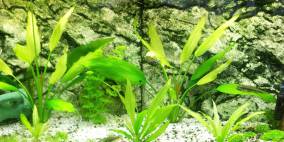
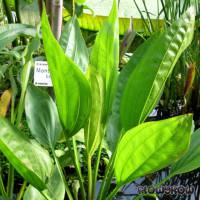
The emersed leaves are narrow-elliptic to narrow ovate, with a pointed to round basis and a pointed tip. The edges of the axes of the inflorescence are alate.
E. subalatus is little known as aquarium plant. It is possible that the plant sold under the name of E. subalatus may be identical with the one erroneously sold as "Echinodorus argentinensis" and might be rather counted among E. palaefolius.
The plant known as Echinodorus spec. 136 from Dennerle is probably E. subalatus, though.
To be continued...
Echinodorus subalatus is a fairly easy-to-keep aquarium plant that also grows well in moderately hard water and over a wide temperature range up to approx. 30 °C, and gets by with medium light intensity. Like all Echinodorus species, it is grateful for a nutrient-rich substrate. Because the plant can grow quite tall and wide (over 35 cm), it is recommended for rather large tanks.
Older, vigorously growing specimens can convert to the emersed form in the aquarium: the stalks of newly formed leaves become increasingly longer, until the plant finally develops only leaves that protrude from the water. If you then cut off all the long-stalked leaves, submersed, shorter-stalked leaves grow back, at least temporarily.
- To be continued -
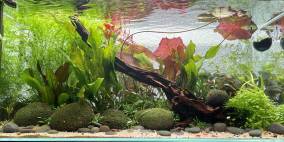
References and further reading:Echinodorus wild forms have in part been displaced, in the trade and the aquarium hobby, by the many conspicuously coloured Echinodorus hybrid cultivars, which however play no great role in aquascaping, especially in the "Asian" nature aquarium style. E. subalatus is admittedly one of the quite large-growing sword plant species, but with its lanceolate, rather long-stalked, light to medium green leaves it has a rather plain, inconspicuous appearance. Perhaps for that very reason this species deserves more attention than it currently receives, especially when designing large, natural-looking layouts.
For those interested in biotope aquariums and planting that is geographically "appropriate" to the fish, the fact that Echinodorus subalatus is part of the flora of many tropical American freshwater habitats may be of interest. Because the species tolerates higher temperatures of up to approx. 30 °C well, it is suitable for discus aquariums.
<a href="https://www.flowgrow.de/db/aquaticplants/echinodorus-subalatus" target="_blank"><img alt="Echinodorus subalatus" title="Echinodorus subalatus" src="https://www.flowgrow.de/db/widget/aquaticplants/echinodorus-subalatus" /></a>
[url=https://www.flowgrow.de/db/aquaticplants/echinodorus-subalatus][img]https://www.flowgrow.de/db/widget/aquaticplants/echinodorus-subalatus[/img][/url]
[widget=aquaticplants/echinodorus-subalatus]Echinodorus subalatus[/widget]