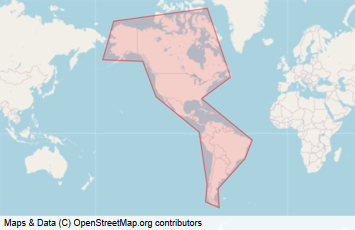
 Range and localities [?]:
Hybrid between Echinodorus reptilis and E. maculatus; likely not naturally occurring but originating from culture


The plant usually denominated Echinodorus schlueteri in Germany is not identical with the plant that was scientifically described in 1981 by Karel Rataj as E. schlueteri, but is presented in this database as Echinodorus maculatus.
True E. schlueteri (sensu Rataj) is far less well-known. However, it is apparently identical with the plant sold as Echinodorus cordifolius 'Mini'. A systematic molecular examination proved that E. schlueteri is very probably a hybrid of E. maculatus and newly described Echinodorus reptilis from south-eastern South America (Lehtonen & Falck 2009). Therefore it is named Echinodorus × schlueteri by Lehtonen, marked as a hybrid by that.
When cultivated submersed, E. schlueteri is a relatively low-growing plant with unicoloured light to medium green leaves. The leaf blades are ovate to slightly heart-shaped, and in contrast to those of E. maculatus, the new leaves do not have any spotted pattern. The leafstalks are about as long as the leaf blades.
The emersed form of E. schlueteri can grow to a height of over 30 cm. It has roundish to ovate leaves with a heart-shaped base and relatively long stalks. The inflorescence is thin, low-lying and usually does not have more than two whorls. The flowers sit on long stalks and have large overlapping petals.
The true Echinodorus schlueteri has higher light requirements and is on the whole less robust than the plant mostly called "E. schlueteri", E. maculatus. Medium light intensity is sufficient, but the plant should have a free, unshaded spot in the aquarium.
Although E. schlueteri is mostly a relatively small sword plant, with a generous supply of nutrients it can become quite large (over 20 cm tall) and develop long-stalked leaves (as does E. maculatus). One can then try to keep it low by cutting off the large leaves.
Under favourable conditions E. schlueteri also produces its thin inflorescences when submersed, on which adventitious plants develop. The plant can be propagated more effectively in emersed culture. The adventitious plants then often in turn produce inflorescences, so that the plant multiplies as if by runners. In older plants daughter rosettes also often develop at the base. One can then try to divide the plant by carefully cutting the young plants off the rhizome with a sharp knife.
Echinodorus schlueteri is one of the few Echinodorus species that remain relatively small. It is best placed in the foreground or midground of the aquarium as a small specimen plant or as a group of a few plants, and in small or nano aquariums also in the background. Unlike the countless colourful Echinodorus cultivars, E. schlueteri with its fresh, uniform, light green looks like a wild form, although it is probably also a hybrid that arose in cultivation. The trade name Echinodorus cordifolius 'Mini' suits the appearance of the plant, which looks like a miniature form of E. cordifolius.
But as already mentioned, with good nutrient supply E. schlueteri can also produce long-stalked, quite large leaves when submersed, and is then no longer usable in the foreground. If it is to stay small, it is better planted in not too nutrient-rich substrate, and longer-stalked leaves are cut off as soon as they develop.
As an emersed plant, Echinodorus schlueteri does not become as massive as e.g. E. cordifolius and would therefore probably be well suited to not too large paludariums or to wabi-kusa. The quite large white flowers on the thin, graceful inflorescences are also interesting on this Echinodorus.
<a href="https://www.flowgrow.de/db/aquaticplants/echinodorus-schlueteri" target="_blank"><img alt="Echinodorus × schlueteri" title="Echinodorus × schlueteri" src="https://www.flowgrow.de/db/widget/aquaticplants/echinodorus-schlueteri" /></a>
[url=https://www.flowgrow.de/db/aquaticplants/echinodorus-schlueteri][img]https://www.flowgrow.de/db/widget/aquaticplants/echinodorus-schlueteri[/img][/url]
[widget=aquaticplants/echinodorus-schlueteri]Echinodorus × schlueteri[/widget]