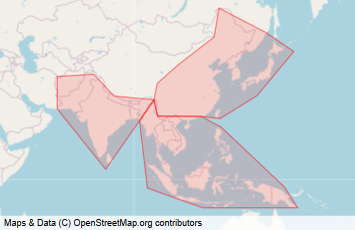
 Range and localities [?]:
widespread in tropical and subtropical Asia


Solenostoma tetragonum is a foliose (= leafy) liverwort that is widespread in tropical-subtropical Asia and occurs in various moist habitats. It has also been counted in Jungermannia and looks outwardly very similar to many other liverwort species from the genera Solenostoma and Jungermannia.
A striking feature of Solenostoma tetragonum can be seen even at low magnification: the roundish, transparent leaves are dotted with opaque specks. These are so-called oil bodies, which are located in the leaf cells. In S. tetragonum, cells with one large oil body each are scattered among many cells without oil bodies. Many other Solenostoma and Jungermannia species have several smaller oil bodies per cell.1
S. tetragonum came onto the market in Germany under the label “Blepharostoma trichophyllum, Perlenmoos”. This aquarium moss was identified in 2009 by Prof. S. R. Gradstein (then Göttingen, now Paris, emeritus) as Solenostoma tetragonum.1 The true Blepharostoma trichophyllum is very probably not cultivated in aquariums and is also not available in the trade. It is a very small foliose liverwort that occurs mainly in the northern latitudes of the world, e.g. on rotting wood and on rocks covered with humus.2 In Blepharostoma trichophyllum the leaves are split down to the base into filaments that are one cell row wide.2 This makes it look completely different from Solenostoma tetragonum.
Confusingly, Heteroscyphus zollingeri is also often called “Blepharostoma trichophyllum” or “Perlenmoos” in the aquarium hobby.1
Since 2012 the company Aquasabi has offered a liverwort from Borneo as Solenostoma tetragonum “Gunung Sumpit”. Its characteristics fit the species S. tetragonum, but it seems to differ somewhat from the aquarium moss that has been labelled “Blepharostoma trichophyllum”.
Possibly further liverworts with trade names such as “Rosa Moss”, “Ross Moos” or the like also belong to S. tetragonum. Perhaps other, similar Solenostoma or Jungermannia species are also traded as aquarium mosses and can be cultivated under water. But they could certainly only be identified to species level by experienced botanists specialising in liverworts or by molecular systematic methods.
<a href="https://www.flowgrow.de/db/aquaticplants/solenostoma-tetragonum" target="_blank"><img alt="Solenostoma tetragonum" title="Solenostoma tetragonum" src="https://www.flowgrow.de/db/widget/aquaticplants/solenostoma-tetragonum" /></a>
[url=https://www.flowgrow.de/db/aquaticplants/solenostoma-tetragonum][img]https://www.flowgrow.de/db/widget/aquaticplants/solenostoma-tetragonum[/img][/url]
[widget=aquaticplants/solenostoma-tetragonum]Solenostoma tetragonum[/widget]