




The name Salvinia natans is familiar to many aquarium and pond owners, because a floating fern is frequently offered in the trade under this name. However, it is probably never Salvinia natans, but tropical species such as Salvinia molesta or S. auriculata. The true S. natans is very probably not cultivated in aquariums and is not available in the trade either. We have no information on how far it is suitable as an aquarium floating plant.
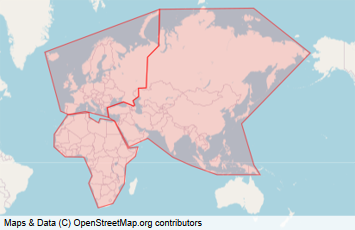
The true Salvinia natans is the only Salvinia species native to Europe. It is also widespread in Asia. In Germany it occurs at only a few sites, is threatened with extinction and is under special legal protection. It is prohibited to collect S. natans in the wild.
This floating fern mainly inhabits warm, nutrient-rich, standing waters in river floodplains. Salvinia natans is annual and towards autumn forms so-called sporocarps (spore fruits), which survive the winter while the plants die off. Young plants emerge from the sporocarps again in spring.
Like all Salvinia species, the common water fern has branched stems floating horizontally in the water, each with three leaves at every stem node. Two leaves are developed as floating leaves and have a hairy, strongly water-repellent upper surface. The third leaf hangs in the water and looks like a tuft of roots (in fact Salvinia species are rootless). The sporocarps develop on these root-like submersed leaves.
Compared with Salvinia molesta and other species of the S. auriculata species group, S. natans differs mainly in the arrangement of the hairs on the upper surface of the floating leaves (see Salvinia molesta).
Salvinia natans is a small Salvinia species with floating leaves only about 0.8 to 1.4 cm long. It is thus similar in size to Salvinia minima from tropical America. The leaves of S. natans, however, are not roundish as in S. minima but oblong, about twice as long as wide, similar to those of the South American species Salvinia oblongifolia, which grows much larger.
<a href="https://www.flowgrow.de/db/aquaticplants/salvinia-natans" target="_blank"><img alt="Salvinia natans" title="Salvinia natans" src="https://www.flowgrow.de/db/widget/aquaticplants/salvinia-natans" /></a>
[url=https://www.flowgrow.de/db/aquaticplants/salvinia-natans][img]https://www.flowgrow.de/db/widget/aquaticplants/salvinia-natans[/img][/url]
[widget=aquaticplants/salvinia-natans]Salvinia natans[/widget]
