 Range and localities [?]:
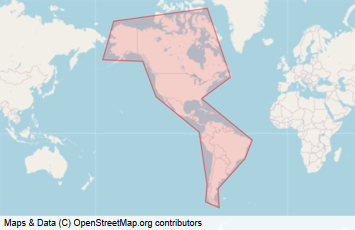
probably eastern or southeastern North America


This arrowhead was cultivated as one of several Sagittaria forms by Peter Schneider (company Aquarium Perle, Zuzgen, Switzerland) and was also presented in an article. He provisionally calls the plant Sagittaria "filiformis" and believes that it is hardly the true S. filiformis.1 Aquarists in Austria and Germany also call the plant "needle arrowhead" ("Nadel-Pfeilkraut") and Sagittaria sp. "Needle".
At the Göttingen Botanical Garden the plant grew for some time in an outdoor water basin and came into flower there. The characteristics of the inflorescences indicate that this arrowhead belongs to the Sagittaria subulata complex. The inflorescences float below the water surface, and only the individual flowers project out of the water. The male flowers have 7 stamens.2
The "needle arrowhead" has very narrow, linear submersed leaves that are often no longer than about 10 cm and mostly around 1.5 to 2 mm wide. With a lavish supply of macronutrients and CO2, however, the leaves can also grow up to approx. 30 cm long and around 3 mm wide. The leaf tip is pointed. The leaves are curved downwards, as in other Sagittaria species, and are medium green, olive green or - especially in strong light - reddish, similar to the underwater leaves of Helanthium tenellum. The plant forms predominantly underground runners that have relatively short internodes.
Although it is not known exactly where the plant was originally introduced from, since it apparently belongs to the Sagittaria subulata group, it is probably native to eastern or southeastern North America.
(For more see "Culture" and "Design")
The "needle arrowhead" is easy to cultivate in aquariums and has only moderate light requirements, but prefers an open, unshaded position. While "normal" Sagittaria subulata tends to form longer leaves when planted densely and shaded by other plants, Sagittaria sp. "Needle" begins to stunt. It grows and multiplies more slowly than the commercially available S. subulata. Sagittaria sp. "Needle" is well suited to tanks without added CO2. Plenty of light promotes the reddish colouring of the leaves.
This Sagittaria can be cultivated well outdoors, at least in the summer half-year. The plant survives the winter outdoors if it is protected from freezing through.2
References and further reading:Although it has been in cultivation for many years and makes few demands, the "needle arrowhead" is little known in the aquarium hobby. It certainly deserves more attention, however, and with its grass-like habit should be very interesting for aquascaping.
Sagittaria sp. "Needle" occupies an intermediate position, in height and appearance, between the very narrow-leaved, often reddish Helanthium tenellum and the much taller Vallisneria nana. In the background of small aquariums, including nano aquariums, this very narrow-leaved arrowhead could be a suitable replacement for V. nana, which may grow too large. In large aquariums, a moderately tall "meadow" can be created in the midground and foreground with the needle arrowhead.
Specific aquascaping examples and experience reports with this fine-leaved Sagittaria would be interesting.
<a href="https://www.flowgrow.de/db/aquaticplants/sagittaria-subulata-needle" target="_blank"><img alt="Sagittaria subulata "Needle"" title="Sagittaria subulata "Needle"" src="https://www.flowgrow.de/db/widget/aquaticplants/sagittaria-subulata-needle" /></a>
[url=https://www.flowgrow.de/db/aquaticplants/sagittaria-subulata-needle][img]https://www.flowgrow.de/db/widget/aquaticplants/sagittaria-subulata-needle[/img][/url]
[widget=aquaticplants/sagittaria-subulata-needle]Sagittaria subulata "Needle"[/widget]