


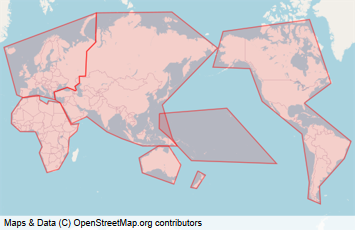
 Range and localities [?]:
cosmopolitan


The floating liverwort, Ricciocarpos natans, is probably little known to aquarists. This small floating plant is the only species of the genus Ricciocarpos and, together with the genus Riccia (crystalworts), belongs to the liverwort family Ricciaceae. The genus name is often also spelled Ricciocarpus.
R. natans is distributed almost worldwide, from the tropics to the cold-temperate climate zone. This liverwort floats on the surface of moderately nutrient-rich, shallow, still, sunny to shaded waters such as pools, ponds, river oxbows, ditches and swamps, often together with other floating plants such as duckweeds and Riccia fluitans. When the water dries up, the floating liverwort forms a terrestrial form on the muddy bottom. In Germany Ricciocarpos natans is quite rare; in the "Red List of the Mosses of Germany" of 1996 the species is classed as threatened (category 3). It is a poor competitor against nutrient-loving floating plants such as duckweeds and is endangered by eutrophication (nutrient enrichment) of the waters.
As an aquarium floating plant, R. natans is probably kept only very rarely, but it is not difficult and has practically the same requirements as many other floating plants.
The floating form of R. natans is a heart- to fan-shaped, dark to medium green thallus that grows to a maximum of about 10 mm long and 9 mm wide and has a fork-branched longitudinal groove on the upper side. On the blackish-violet underside there are long, strap-shaped, pointed ventral scales, which one could mistake for roots, and a hairy felt of rhizoids. During growth the thallus branches in a forked manner and then breaks apart into two equal-sized parts each time, whereby the floating liverwort reproduces asexually. The floating carpet of R. natans does not become as dense as, e.g., a duckweed cover, because the long ventral scales project laterally beyond the thallus margin and keep the individual plants at a distance from one another.
The terrestrial form of Ricciocarpos natans becomes broader than the aquatic form, has much shorter ventral scales and develops in a rosette shape because the thallus branches cannot drift apart. The floating liverwort then resembles various terrestrial Riccia species such as Riccia glauca. Compared with Riccia fluitans, which is generally known in the aquarium hobby, Ricciocarpos natans bears little similarity.
(For more see "Culture" and "Design")
Ricciocarpos natans grows as a floating plant best under conditions that also suit other floating plants such as duckweeds: at least medium light intensity and nutrient-rich water that is not too strongly agitated. With a deficiency of macronutrients, especially nitrogen, the thalli develop poorly and are pale green.
On wet, nutrient-rich substrate, e.g. loam or mud, the floating liverwort can be cultivated in its land form.
- To be continued -
The floating liverwort is an unusual plant, interesting from a natural-history point of view, which shows to best advantage mainly in open tanks or pond aquariums. Ricciocarpos natans is larger and more conspicuous than e.g. the duckweeds of the genus Lemna and does not form such a dense floating carpet as they do. Nevertheless, in its floating form this liverwort is relatively inconspicuous and, with its black-violet underside, may not look particularly attractive in an aquarium. Ricciocarpos natans will probably not find wide use as a floating aquarium plant and will rather rarely be kept as a botanical curiosity.
It might nevertheless be worth trying to use the peculiar-looking, rosette-forming land form of R. natans in layouts, e.g. in paludariums or wabi-kusa.
<a href="https://www.flowgrow.de/db/aquaticplants/ricciocarpos-natans" target="_blank"><img alt="Ricciocarpos natans" title="Ricciocarpos natans" src="https://www.flowgrow.de/db/widget/aquaticplants/ricciocarpos-natans" /></a>
[url=https://www.flowgrow.de/db/aquaticplants/ricciocarpos-natans][img]https://www.flowgrow.de/db/widget/aquaticplants/ricciocarpos-natans[/img][/url]
[widget=aquaticplants/ricciocarpos-natans]Ricciocarpos natans[/widget]


