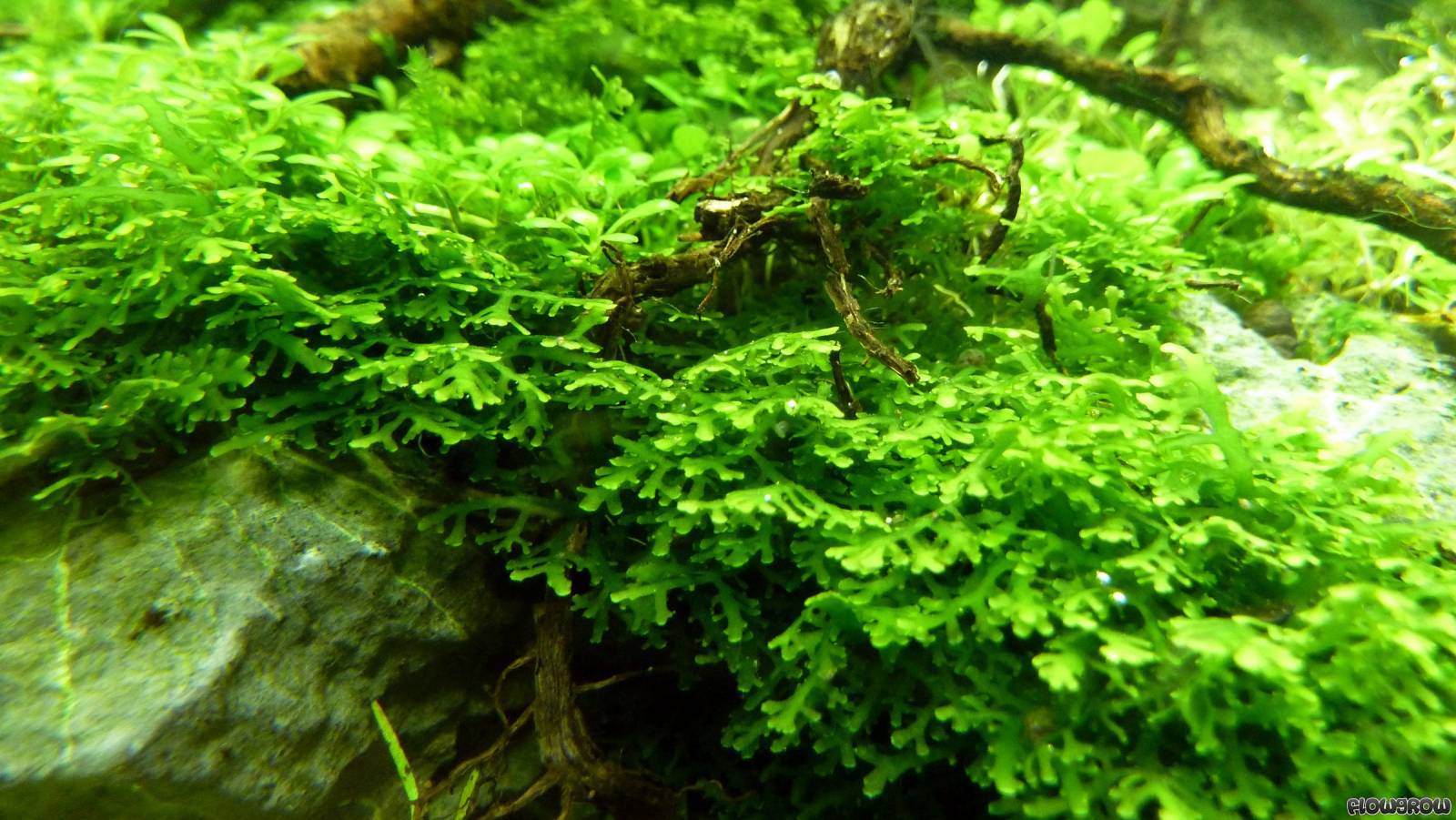


Riccardia species (German: “Riccardimoos”) are small, delicately branched liverworts. The genus Riccardia was described in 1821 by Asa Gray, and to date more than 400(!) species names have been published. The actual number of species is still uncertain; it is generally estimated that there are “only” 90-100 Riccardia species worldwide. These species look very similar to one another and are often difficult to identify.
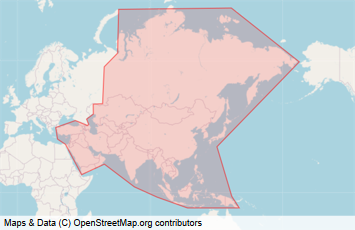
Most Riccardia species occur in the tropics and in the southern hemisphere, but some also in cool northern latitudes. Five species are known from Europe including Germany: Riccardia chamedryfolia, R. incurvata, R. latifrons, R. multifida and R. palmata. In the wild, Riccardia species colonise various moist to wet sites: stream banks, springs, peaty soil, tree roots, rock with trickling water, etc. Some of the species can also be found under water.
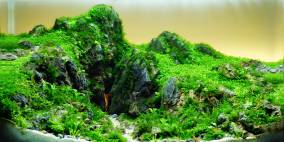
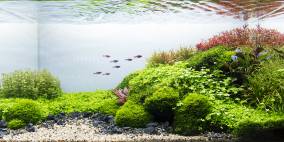
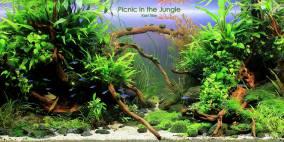
Riccardia species have not been used in the aquarium hobby for very long and have become popular under names such as “Coral Pellia” or “Mini Pellia”.
According to Kasselmann (2010), Riccardia was collected by Holger Windeløv on the island of Phuket (Thailand) and identified by the bryologist Benito C. Tan (Singapore) as R. graeffei. The name Riccardia chamedryfolia is also frequently used for aquarium Riccardia. This species occurs in the temperate climate zone, among others in Germany, but this name is presumably used mistakenly in the aquarium hobby, and true R. chamedryfolia is not cultivated as an aquarium plant (Kasselmann 2010).
In aquarium culture, however, there are at least three different Riccardia types. The differences between them become apparent when they are cultivated under the same conditions. It cannot easily be said which species they are and which of them is Riccardia graeffei. However, these Riccardia types also look very similar and can be used in the same way in aquascaping. For this reason, aquarium Riccardia is collectively called Riccardia spp. (“Riccardia species”) here.
Riccardia species are thalloid (leafless) liverworts. The thallus has no midrib; it can be between 0.2 and 2 mm wide and 1 to 10 cm long and is mostly densely branched (pinnate, antler-shaped or palmately divided). Depending on the species, the cross-section of the thallus has a different shape, e.g. flat-semicircular or lens-shaped. On the underside of the thallus, fine, hair-like rhizoids form, with which the liverwort can attach itself to the substrate.
- To be continued -
(For more: see experience report)
<a href="https://www.flowgrow.de/db/aquaticplants/riccardia-spp" target="_blank"><img alt="Riccardia spp." title="Riccardia spp." src="https://www.flowgrow.de/db/widget/aquaticplants/riccardia-spp" /></a>
[url=https://www.flowgrow.de/db/aquaticplants/riccardia-spp][img]https://www.flowgrow.de/db/widget/aquaticplants/riccardia-spp[/img][/url]
[widget=aquaticplants/riccardia-spp]Riccardia spp.[/widget]