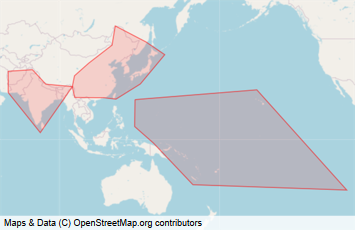
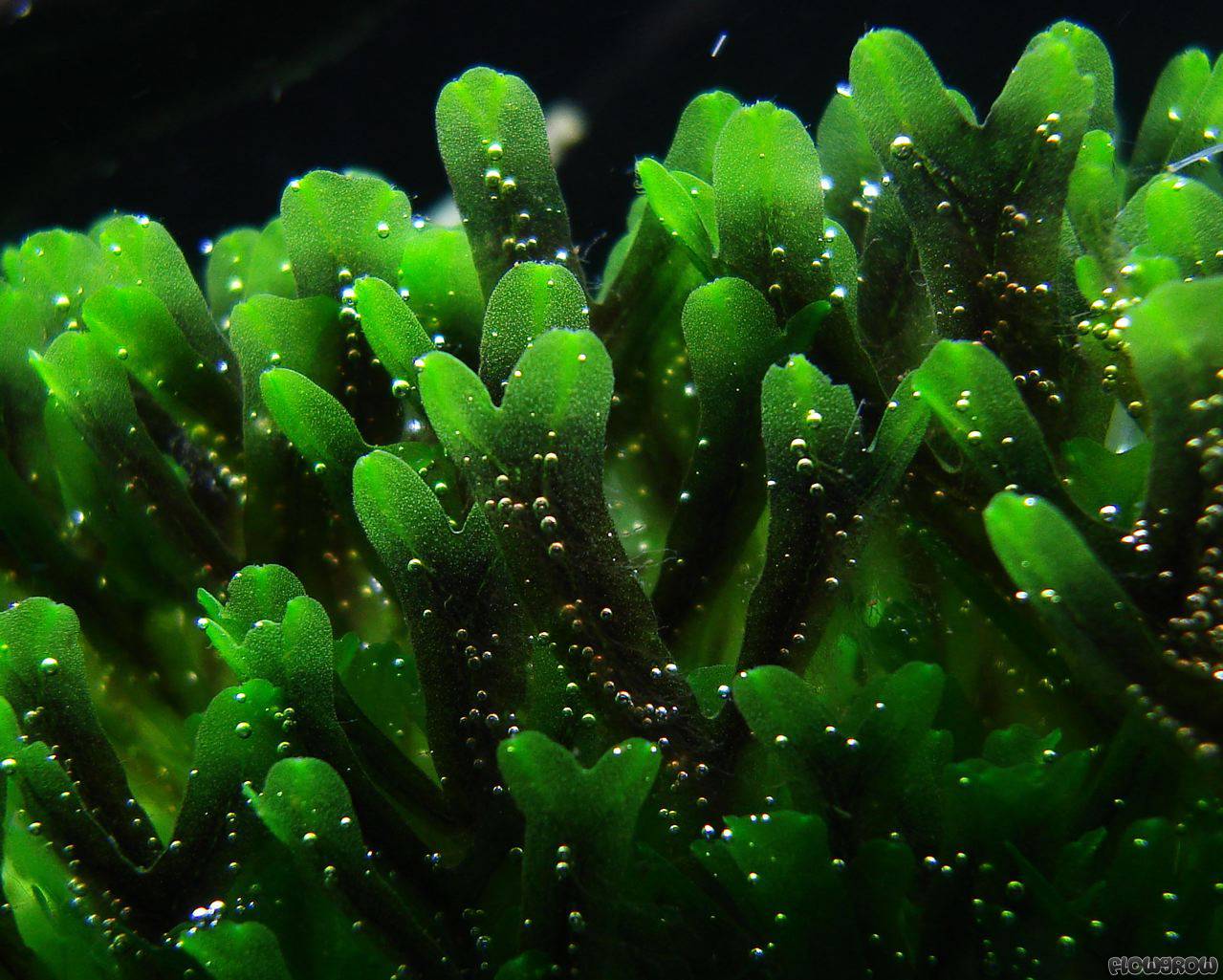


Monosolenium tenerum is a beautiful, dark green liverwort originating from warm-temperate to subtropic areas of northern India, Nepal, Eastern Asia and Hawaii. There it is found on moist, shaded ground rich in nitrogen. It is quite rare in nature but can be more frequently found in settlements. This plant debuted as an aquarium moss in 2002, when it got well-known in the hobby, at first under the (false) name of Pellia endiviifolia. In the following year it was identified as Monosolenium tenerum by bryologist Prof. S.R. Gradstein (Goettingen University).
It is often confused with the so-called suesswassertang, a fern prothallium. For distinction, please see "Lomariopsis cf. lineata, 'Suesswassertang'".
M. tenerum could be described as a significantly larger, darker version of Riccia fluitans. However, to its advantage, it does not float but remains on the ground, where it forms cushions. Aquarium culture is easy, it thrives under very diverse conditions. Under lots of light and additional CO2 fertilisation it is more robust and looks best. Moderate temperatures and an ample phosphate level also help.
This liverwort species is easily propagated by simply parting the cushions. Its submerse form does not attach itself to surfaces, and may develop into a veritable pest when growing loosely. Thus it is best tied to rocks with a nylon line or tucked between other waterplants. At first it looks less than great when tied to a rock, but after a short time it grows into an attractive tuft which is easily kept in form by trimming. For doing so it is best to take the rock out of the tank, if possible. If you trim inside the aquarium, make sure you siphon the loose ends off. In a shrimp tank, you ought to make sure that there are none in the cut-off tufts, shrimp often sit in Monosolenium.
If Monosolenium tied to a rock is allowed to grow too large, the lowest, oldest parts may die off and the cushion comes off its substrate.
The emersed form of Monosolenium tenerum grows excellently on moist to wet substrates. The emersed thalli grow flatly and get wider than those of the submersed form. It is suitable e.g. for moist terrariums, along artificial water trickles, waterfalls etc.
M. tenerum can be used in quite variable ways in the aquarium and is especially suitable for the foreground and the middle. Its dark green hue forms a nice contrast against lighter-coloured foreground plants like Eleocharis parvula and Glossostigma elatinoides. It also looks good if several tufts of Monosolenium of different size are strewn in between meadow-forming plants. As an alternative, Monosolenium tenerum can be used as a surface-covering plant in the foreground, however, this method is best for large tanks.
As a charge in the aquarium, Monosolenium tenerum proves undemanding and thrives under a wide variety of conditions. Under abundant light and CO2 supplementation, however, it becomes more robust and shows itself at its most attractive. Temperatures in the middle range and a generous phosphate level can also help it develop even better. Under low lighting intensity rather thin, upright thallus branches form.
The delicate liverwort can easily be propagated by simple division. It becomes interesting, however, when it comes to trimming M. tenerum. Since in its submersed form it does not "attach itself" on its own and, when loose, can become a real nuisance, it is best introduced into the aquarium fixed to stones with nylon thread or in small tufts between other plants. Tied onto a stone it may at first not look particularly attractive, but it quickly grows into a bush and can be kept in shape well. For trimming it is recommended to take the plant out of the aquarium, as far as this is possible. If you prune the liverwort in the aquarium, it is best to suck up or net the cut-off pieces, because every snippet can continue to grow and the liverwort may then turn up in many places in the aquarium where you do not want it. If shrimps are in the tank, the Monosolenium cushions should be searched for them before trimming, as the shrimps like to hide in them.
If you let tied-on Monosolenium grow too large, the lowest, oldest parts can die off, whereupon the cushion detaches from the surface. It must also be noted that the thalli of M. tenerum are very brittle.
Monosolenium tenerum also grows excellently in the land form on moist to wet substrate. The emersed thalli grow flat and usually become broader than in the underwater form. The delicate liverwort can, e.g., be established in humid terrariums, on artificial trickles, waterfalls etc.
Monosolenium tenerum can be used in a relatively wide variety of ways in the aquarium, above all for foreground and midground planting. Its dark green tone contrasts excellently with lighter-coloured foreground plants such as Eleocharis pusilla ("E. parvula") and Glossostigma elatinoides. It looks good when several Monosolenium bushes of different sizes are scattered between such lawn-like plants. Alternatively, M. tenerum can be used over a large area as a foreground plant, even though this use is probably best suited to larger tanks.
Because the delicate liverwort grows excellently on moist to wet, nutrient-rich substrate, it is certainly also of interest for the design of emersed layouts (ripariums, humid terrariums, wabi-kusa).
<a href="https://www.flowgrow.de/db/aquaticplants/monosolenium-tenerum" target="_blank"><img alt="Monosolenium tenerum" title="Monosolenium tenerum" src="https://www.flowgrow.de/db/widget/aquaticplants/monosolenium-tenerum" /></a>
[url=https://www.flowgrow.de/db/aquaticplants/monosolenium-tenerum][img]https://www.flowgrow.de/db/widget/aquaticplants/monosolenium-tenerum[/img][/url]
[widget=aquaticplants/monosolenium-tenerum]Monosolenium tenerum[/widget]