


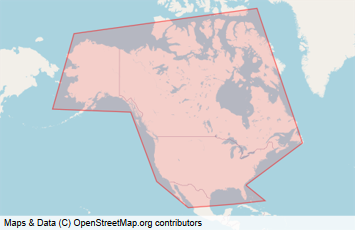
 Range and localities [?]:
Eastern and southeastern USA: Massachusetts to Florida in the south and eastern Texas in the west
Ludwigia sphaerocarpa is a marsh plant distributed in the southern US states that colonises various wet habitats.1 As an aquarium plant it has been known only since 2008 and until recently (about 2012) only in the USA. Some aquarists in Europe are already cultivating the plant, but it is still largely unknown here.2
In the USA the plant was at first mistakenly thought to be Ludwigia pilosa . Aquarists in Texas collected the plant in the wild, found that it is suitable as an aquarium plant and looks splendid submersed, and passed it on under the name L. pilosa. Later, Cavan Allen (USA) informed the forum www.aquaticplantcentral.com that it had been identified as Ludwigia sphaerocarpa on the basis of its floral characteristics. True L. pilosa is a similar, closely related species that is probably not (yet) cultivated in aquariums.
Ludwigia sphaerocarpa and L. pilosa belong to the Ludwigia section Microcarpium, as does L. glandulosa. Some further species from this section have also already proved suitable for aquariums (information from Cavan Allen1).
In the terrestrial form Ludwigia sphaerocarpa has oblong leaves and then looks rather inconspicuous. At the base the plant develops creeping or water-floating shoots (stolons) that bear obovate to roundish, toothed leaves. The leaf teeth have tiny openings, so-called hydathodes, at the tip. Almost all other species of the section Microcarpium also form stolons.1
The submersed shoots of L. sphaerocarpa that develop in the aquarium correspond to these stolons, but are more compact and densely leaved, almost rosette-like. This makes L. sphaerocarpa very different from other aquarium Ludwigias. Depending on the light intensity, the submersed leaves are coloured green to splendidly reddish orange, similar to Ludwigia inclinata var. verticillata 'Cuba'.1
L. sphaerocarpa is not a plant for aquarium beginners. To maintain a healthy, low growth habit, it needs intense lighting and must not be shaded. Otherwise the leaves stay green, and the plant grows very slowly and possibly dies.
Stems that have become too large can be cut off and replanted. A few new shoots sprout from the remaining stump within a short time.1
References and further reading:Owing to its compact growth, Ludwigia sphaerocarpa, unlike other Ludwigia species, is better suited to the foreground and midground of aquascapes. If conditions are right and it is carefully pruned, this unusual Ludwigia develops strikingly attractive, densely leaved, reddish-orange shoots. Established specimens can develop shoots more than 10 cm wide; in the foreground it needs quite a lot of space, and it is best placed next to smaller plants that can also hide the less attractive lower part of the stems.1
References and further reading:<a href="https://www.flowgrow.de/db/aquaticplants/ludwigia-sphaerocarpa" target="_blank"><img alt="Ludwigia sphaerocarpa" title="Ludwigia sphaerocarpa" src="https://www.flowgrow.de/db/widget/aquaticplants/ludwigia-sphaerocarpa" /></a>
[url=https://www.flowgrow.de/db/aquaticplants/ludwigia-sphaerocarpa][img]https://www.flowgrow.de/db/widget/aquaticplants/ludwigia-sphaerocarpa[/img][/url]
[widget=aquaticplants/ludwigia-sphaerocarpa]Ludwigia sphaerocarpa[/widget]


