
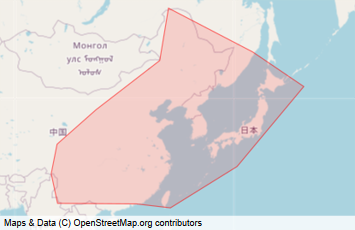
 Range and localities [?]:
 East Asia: China, Taiwan, Korea, Japan (Honshu, Shikoku, Kyushu)
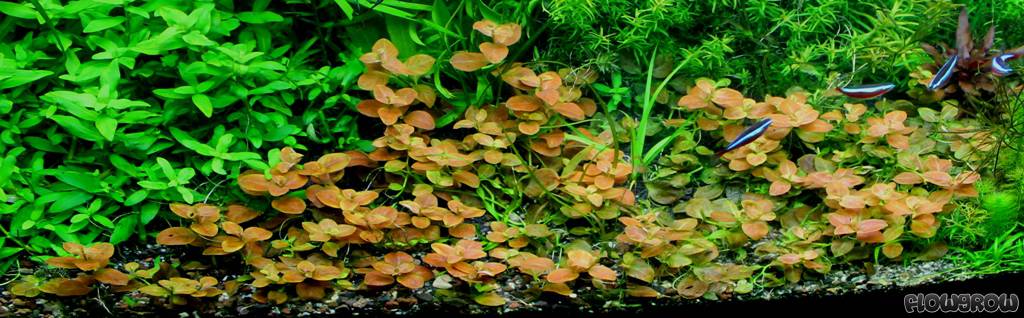
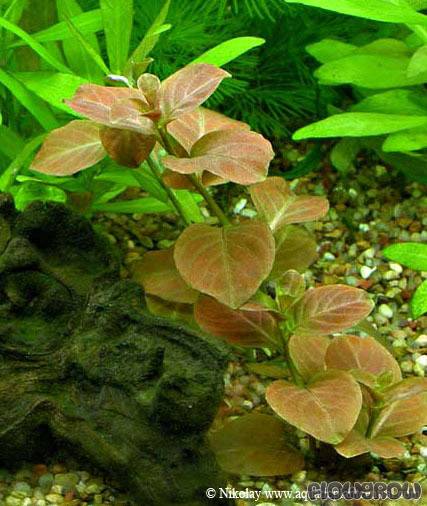
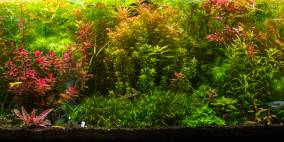
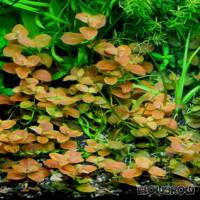
Ludwiga ovalis is a rather new species in the aquarium hobby. This Ludwigia, originating from East Asia, is quite easy in cultivation, which makes it increasingly popular; its beautiful pink-orange ovate leaves might help, too. In its natural habitat, it is found in cooler waters or on very moist to wet soil. Then its growth habit is creeping.
L. ovalis is a low-growing stem plant with roundish to ovate leaves quite similar to those of L. repens. In contrast to the latter, however, the leaves of L. ovalis are alternate (1 leaf per node). Amongst the most frequently cultivated species of Ludwigia, this is a characteristic only found in L. glandulosa and L. ovalis (most Ludwigia species have alternate leaves, however, almost all of those species cultivated in aquaria have opposite leaves and thus 2 leaves per node).
The stems of L. ovalis tend to grow with a little slant, however, their overall growth habit is uprigt. They form lateral shoots on the nodes regularly. Moderate to strong light suffices for a good growth rate. Limiting the nitrate and/or phosphate content of the water brings about an even more intensive colouration of the leaves. CO2 injection is not really a must, but helps L. ovalis grow faster and more robust. A micronutrient supply is required, and iron is important for intensive plant colours.
Emersed cultivation is difficult and requires very moist conditions as well as lots of light (direct sunlight is a must). The flowers are small and inconspicuous.
Propagation is easy, as in most other stem plants, just cut off lateral or top shoots and re-plant in the substrate.
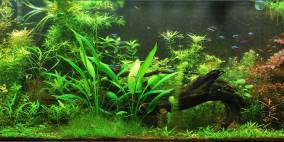
L. ovalis is a unique, highly attractive plant suitable for almost any aquascape, as most other pink-orange plants are far more demanding. The low-growing stems are ideally suited for the middle- or foreground of an aquarium. It is recommendable to plant the background with light green plants to create a beautiful contrast.
Medium to strong light is sufficient for good growth. Limiting nitrate and/or phosphate in the water brings out an even more intense colouration. CO2 supply is not strictly necessary, but with it L. ovalis grows more robustly and faster. Micronutrient fertilisation is necessary, and the iron supply is important for good colouration.
Emersed cultivation is difficult and succeeds only under very humid conditions with a great deal of light (direct sunlight is required). The flowers are small and inconspicuous.
Propagation is carried out, as with other stem plants, by cutting off and replanting side shoots or the shoot tip.
References and further reading:L. ovalis is a unique and attractive plant for almost any aquascape, as many other pink-orange plants make considerably higher demands on cultivation. The low-growing stems can be placed very well in the midground or foreground of an aquarium, with light green plants in the background, to create a beautiful contrast.
References and further reading:<a href="https://www.flowgrow.de/db/aquaticplants/ludwigia-ovalis" target="_blank"><img alt="Ludwigia ovalis" title="Ludwigia ovalis" src="https://www.flowgrow.de/db/widget/aquaticplants/ludwigia-ovalis" /></a>
[url=https://www.flowgrow.de/db/aquaticplants/ludwigia-ovalis][img]https://www.flowgrow.de/db/widget/aquaticplants/ludwigia-ovalis[/img][/url]
[widget=aquaticplants/ludwigia-ovalis]Ludwigia ovalis[/widget]