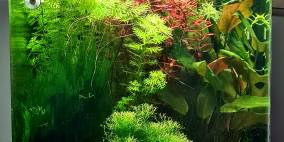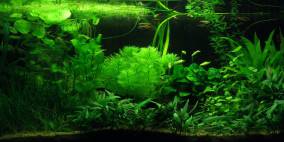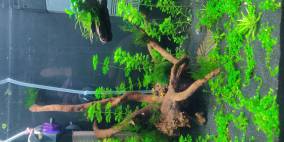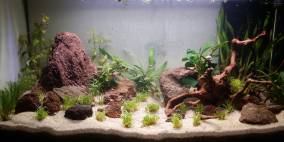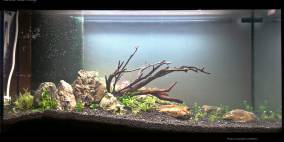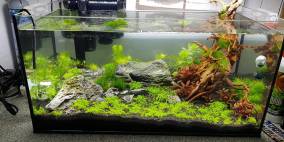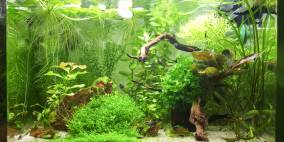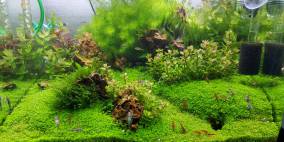

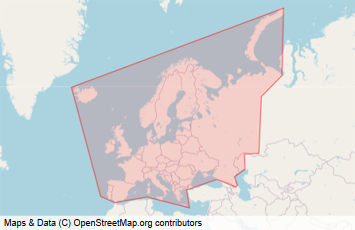
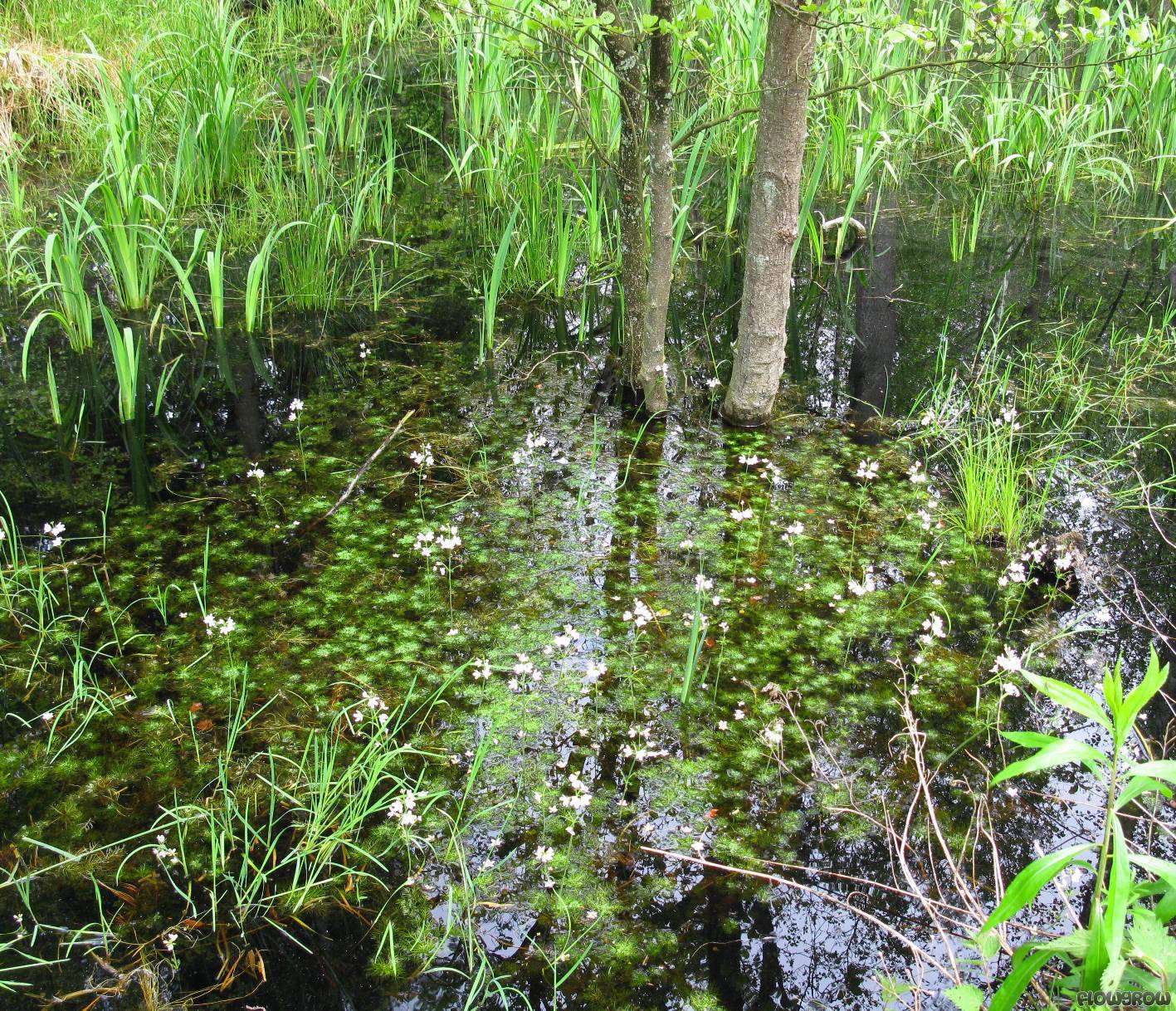
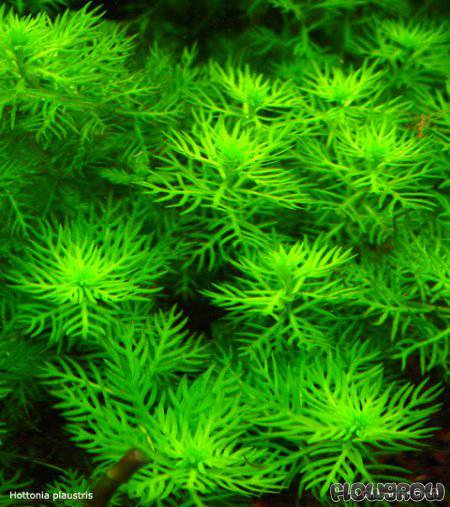
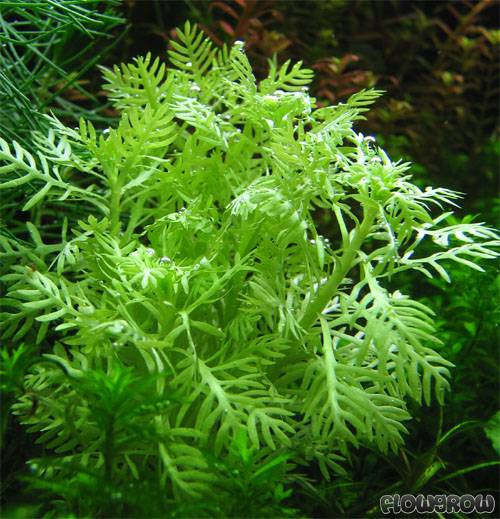
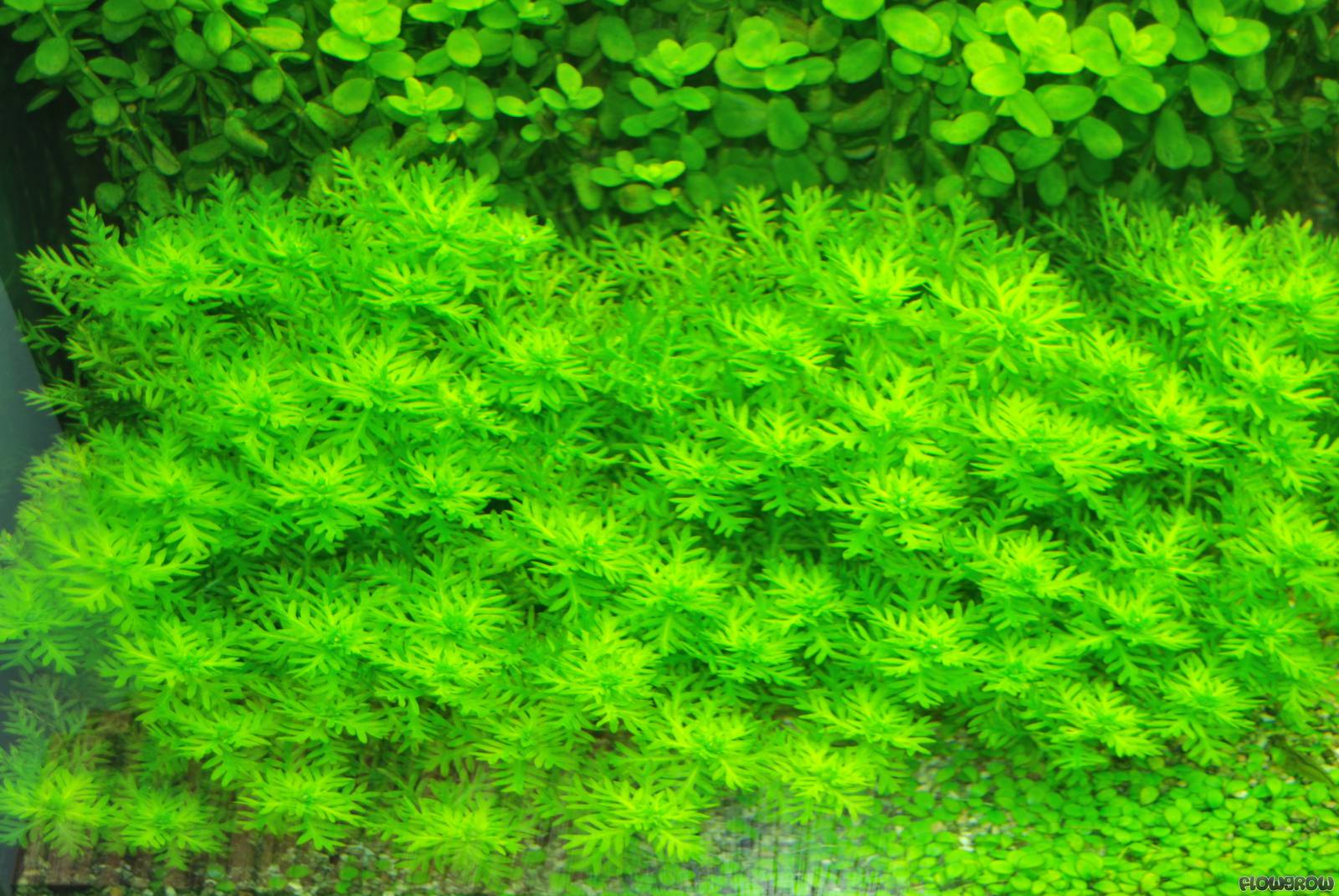
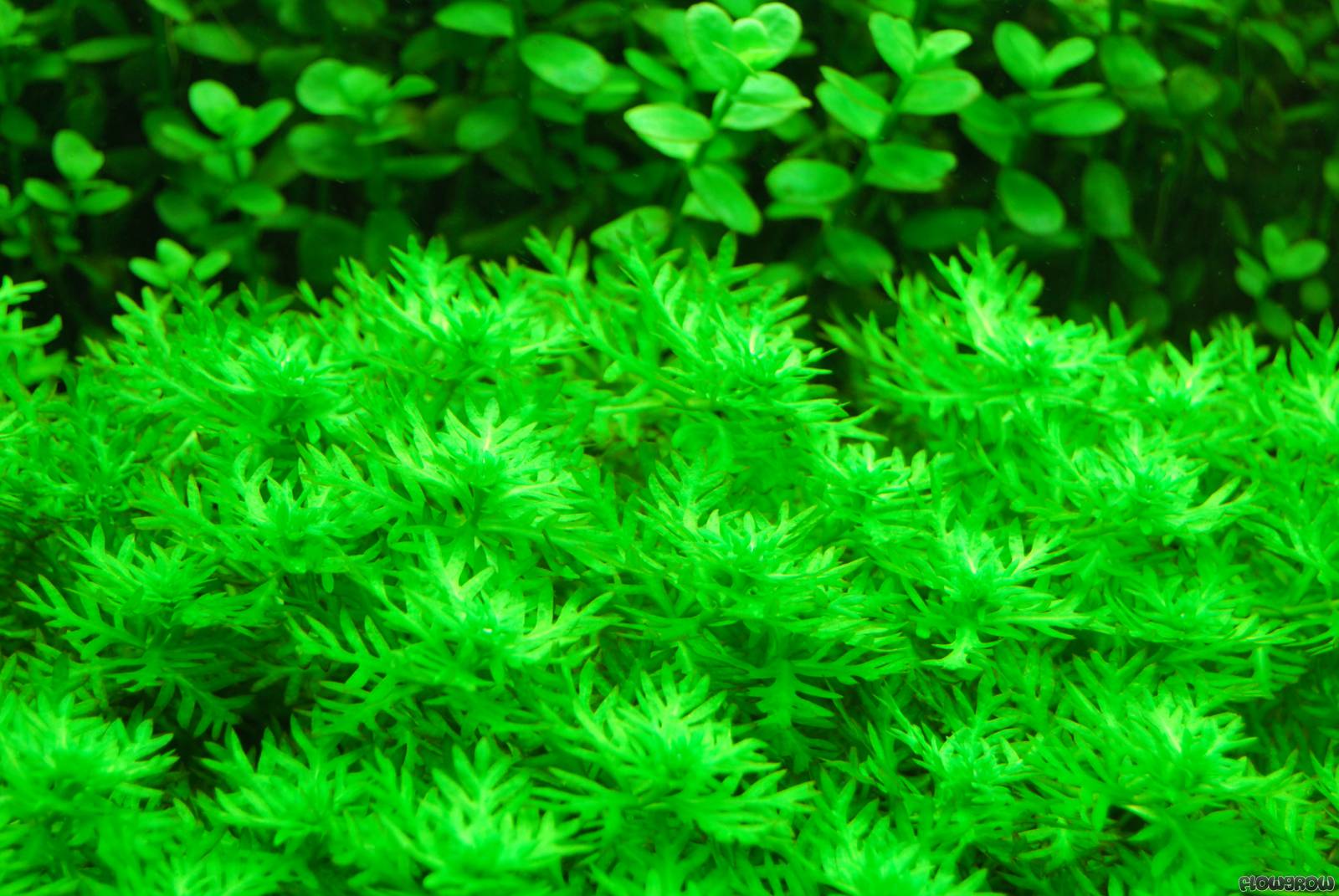
Hottonia palustris is native to Europe, an aquatic plant with pinnate, alternate leaves. It is endangered, critically endangered or already extinct in several regions. In Germany, the water violet or featherfoil is legally protected, and according to the German "Red List" of 1996, it is an endangered species there. Although still quite widely spread in the North German Plain, its overall populations are receding. Featherfoil e.g. grows in shaded, muddy-peaty ditches or on the edges of oxbow lakes, forming dense submersed populations. Only its beautiful flower stalks reach above the waterline in May and June. If the location falls dry, the plant forms low-growing, matlike emersed populations. It is a known medicinal plant in natural medicine. It is illegal to collect Hottonia palustris from the wild, however, it is readily available for ponds or aquariums in trade.
In trade, featherfoil is often called Hottonia inflata. However, this North-American plant is obviously not in cultivation; in nature, it is a hibernating annual. Those aquarium plants denominated as H. inflata are probably always to be counted among Hottonia palustris, which is a perennial in nature.
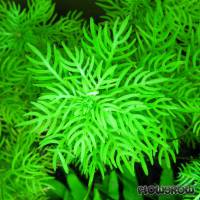
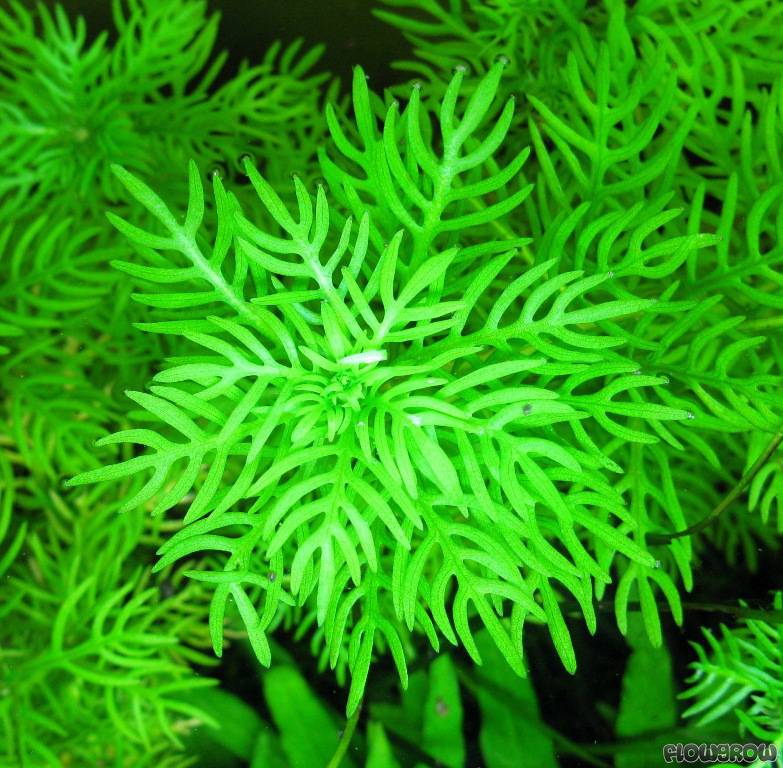
Featherfoil looks quite similar to Limnophila and Myriophyllum species. However, most of these have leaf whorls, whereas the leaves of Hottonia palustris are growing densely alternate - very much like Proserpinaca palustris.
H. palustris is relatively easy to cultivate as aquarium plant, needs lighting on the strong side and a constant supply of nitrate and phosphate by a liquid fertiliser. Lighting intensity should be at least 0.5 watts/l in order to prevent the lower plant parts from rotting away. H. palustris should never be placed in the shade - this would cause its slow, but certain death. CO2 injection leads to healthy, lush growth. As European native plant, it is especially suited for coldwater tanks, however, it also does well in tropical aquariums, given that temperatures don't rise above 26 °C. Cooler water furthers growth, wider shoots with up to 5 cm in diameter and overall good health. NO3 and PO4 should always be traceable in the water, the most recommendable concentrations are over 5 respectively 0.5 mg/l. Nitrate deficiency leads to stunted growth and a yellowish discolouration, phosphate deficiency causes the plant to assume a darker hue and to slowly wither away.
Under optimal growth conditions, H. palustris is a fast grower and throws many lateral shoots. Trimming is best done by simply pinching off the top shoot and leaving the lower part in the substrate, or by replanting the top shoot and discarding the old plant. The first method leads to a very bushy growth, though. For propagation, cut off lateral shoots and re-plant.
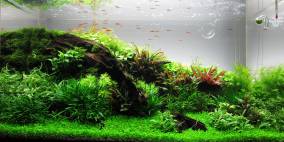
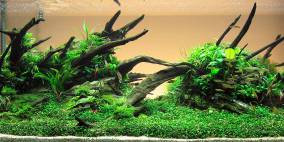
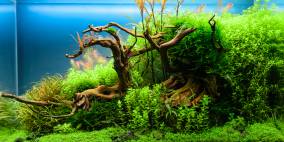
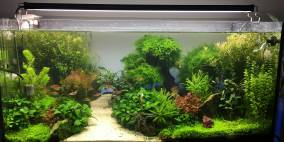
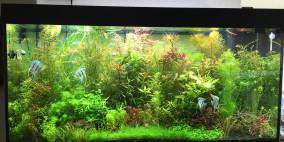
H. palustris is ideally suited for creating an extravagant bush in the middleground of the aquarium. The leaves at the shoot tips remind of snow crystals and contrast excellently against other plants. H. palustris is often used in Dutch-style tanks, however, it is also a great plant for the nature aquarium layout style.
Featherfoil is completely hardy in Central Europe and is especially suited for ponds in semi-shade, where it forms beautiful cushions in shallower water close to the edges. It grows best in muddy soil rich in nutrients.
Hottonia palustris is a moderately demanding aquarium plant that needs rather strong lighting and a steady supply of nitrate and phosphate via the water. The light intensity should be at least 0.5 watts per litre so that the lower parts of the plant do not rot away. It should never be placed in shade, otherwise it will slowly but surely die. CO2 supplementation leads to a vital, robust appearance. As a plant native to Europe, it is naturally especially suited to cold-water tanks, but also grows well in tropical aquariums as long as the temperature does not rise above 26 °C. Cooler water promotes faster growth, broader shoots up to 5 cm in diameter and good health overall. Nitrate and phosphate should always be detectable and are best present at concentrations above 5 and 0.5 mg/l respectively. Nitrate deficiency leads to stunted growth and a yellowish colouration, phosphate deficiency to a darker colouration and gradual wasting of the plant.
Under optimal growing conditions, however, H. palustris is fast-growing and forms many side shoots. Trimming can be done by simply pinching off the shoot tip and leaving the lower part in place, or by replanting the upper part and discarding the rest of the stem. The former method, however, leads to the bushiest growth. For propagation, side shoots can be cut off and planted into the substrate.
References and further reading:Hottonia palustris can be used to create a striking bush in the midground of the aquarium. At the shoot tips the foliage is reminiscent of snow crystals and forms an excellent contrast to other plants. The plant is often used for aquariums in the Dutch style, but is just as well suited to the "nature aquarium" style.
The perennial water violet, completely hardy in Central Europe, is particularly suited to garden ponds in rather semi-shaded locations. It looks good as a cushion-like stand in shallower water near the bank and grows best in muddy, nutrient-rich soil. When the plants grow outdoors under favourable conditions, the striking inflorescences that protrude from the water develop at the shoot tips in spring and early summer, on which flowers arranged in whorls open. These are white to pale lilac with a yellow centre.
References and further reading:<a href="https://www.flowgrow.de/db/aquaticplants/hottonia-palustris" target="_blank"><img alt="Hottonia palustris" title="Hottonia palustris" src="https://www.flowgrow.de/db/widget/aquaticplants/hottonia-palustris" /></a>
[url=https://www.flowgrow.de/db/aquaticplants/hottonia-palustris][img]https://www.flowgrow.de/db/widget/aquaticplants/hottonia-palustris[/img][/url]
[widget=aquaticplants/hottonia-palustris]Hottonia palustris[/widget]