
[unveränderte Übersetzung]
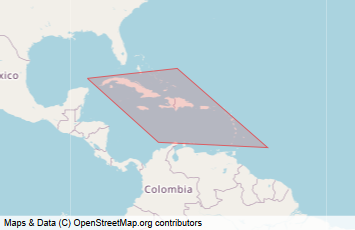
Hemianthus callitrichoides aka dwarf baby tears was imported from Cuba in 2004 by Tropica and has thus found its way into the hobby relatively recently. The plant was discovered by Holger Windeløv around 90 km to the East of Havana in a rocky river during the dry season. The dense, cushion-like population rooting in gravelly substrate was growing around 50 cm above the waterline, and he safely assumed that during the rainy season, the entire population is submersed in waters up to 1 m deep, with a strong current.
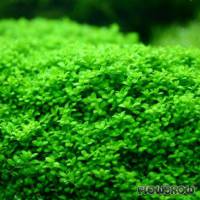
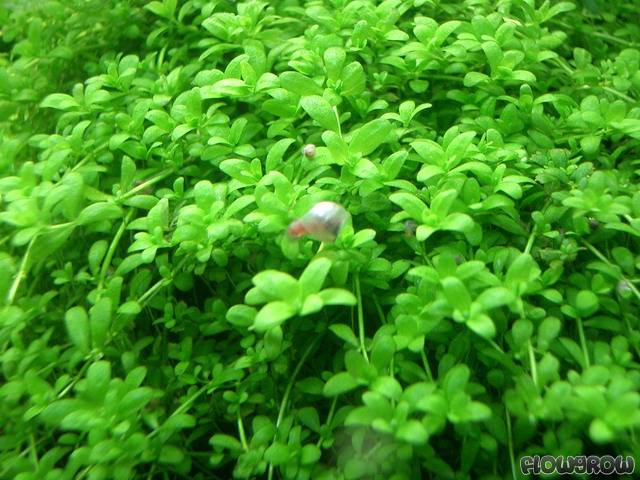
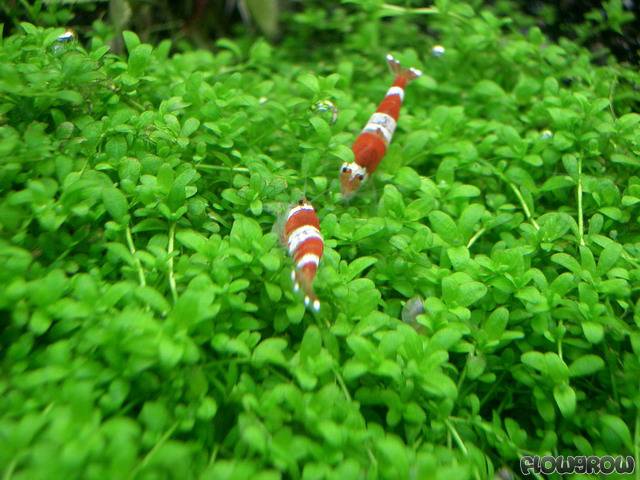
Its leaf size of only four to three millimetres makes this Hemianthus species the smallest aquarium plant in the world. For several years it has been among the most popular aquascaping plants.
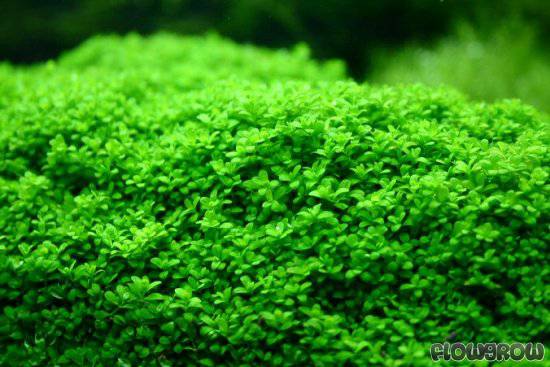
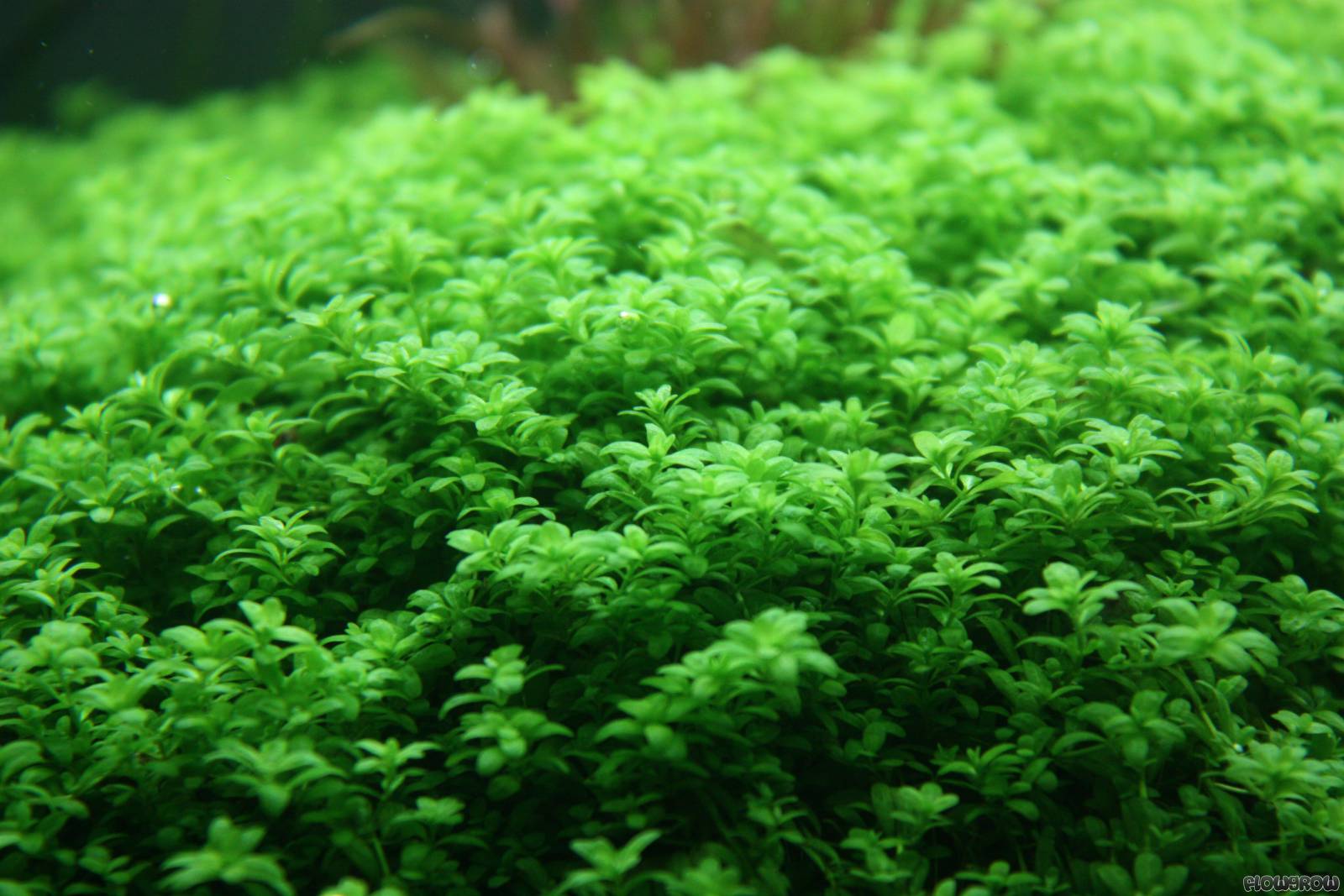
The majority of Hemianthus callitrichoides plants you can buy in the trade were cultivated emersed and have roundish leaves. In the axils, sometimes you can see tiny white flowers. The submersed form looks quite similar, with a low carpet- or cushionlike growth. Its leaves are smaller and a bit narrower. It has more or less upright but very short stems with opposite leaves (two leaves per node), and, at the same time, creeping as well as overhanging shoots. On both the latter, the leaves are frequently found to form whorls of three per node.
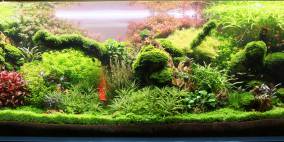
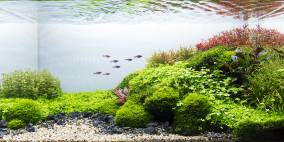
When planted in small patches a few centimetres apart in the well-lit foreground of an aquarium, Hemianthus callitrichoides grows to form a dense, bright green plant carpet within 3 to 4 weeks. Planted in an elevated place it forms decorative overhanging shots.
H. callitrichoides has a more compact growth in relation to light intensity. Its optimum temperature lies around 25 °C, however, it also tolerates temperatures in the range between 20 and 28 °C. It is not always necessary to fertilise H. callitrichoides with CO2, however, the plant grows much healthier with it. It is susceptible to iron deficiencies, whose symptoms are yellow shoot tips. It should also be supplied with a sufficient amount of macronutrients, especially nitrate.
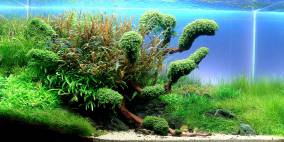
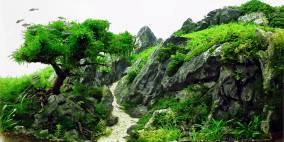
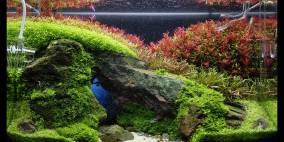
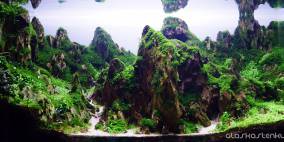
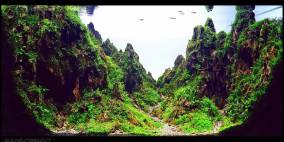
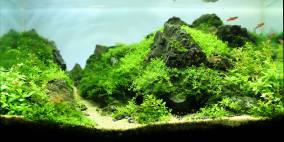
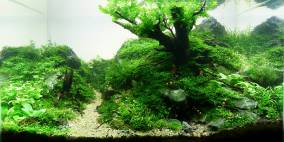
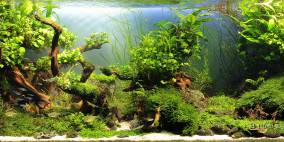
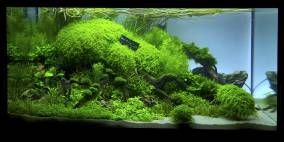
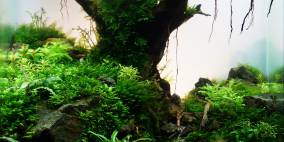
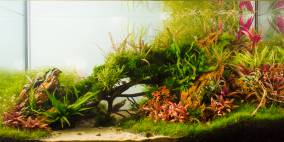
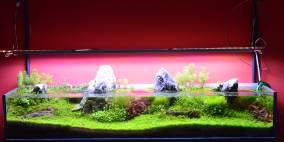
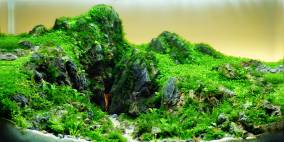
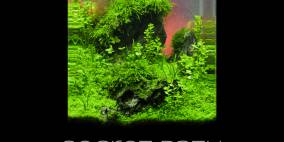
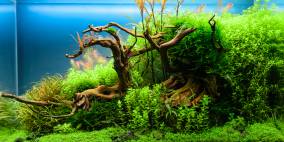
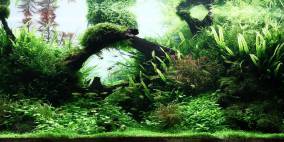
Its relative hardiness and its very nice appearance make H. callitrichoides a highly attractive and recommendable aquarium plant. It is not only suitable for carpet-like structures in the foreground, but also for layouts with many stones as a nice accent in the crevices, where it reminds the onlooker of alpine cushion plants. It can even be attached to driftwood, where it forms large bright green cushions with overhanging shoots. This tiny plant is highly suitable for nano tanks.
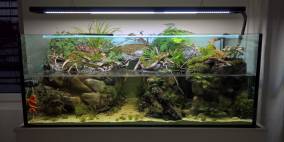
Under sufficiently intense light, Hemianthus callitrichoides can also be cultivated above the waterline, where it generally forms more compact cushions than under water. In an open tank, it may be attached along the waterline of driftwood or rocks sticking out of the water.
Planted in tufts a few centimetres apart in well-lit spots in the foreground of the aquarium, the Cuban pearlweed grows together within about 3-4 weeks into a dense, light green carpet of plants. If it is placed on a raised spot, it forms decorative shoots creeping or hanging downwards.
H. callitrichoides grows more compactly the stronger the lighting is. It has its optimum temperature range around 25 °C, but can be kept at temperatures between 20 and 28 °C. CO2 fertilisation is not always necessary, but is recommended for healthy growth. The plant is somewhat susceptible to iron deficiency, which shows as yellowish shoot tips. It should also be well supplied with macronutrients, especially nitrate.
With plenty of light, Hemianthus callitrichoides can be cultivated emersed well and then usually forms more compact, firmer cushions than under water. High humidity does not seem to be necessary for this.
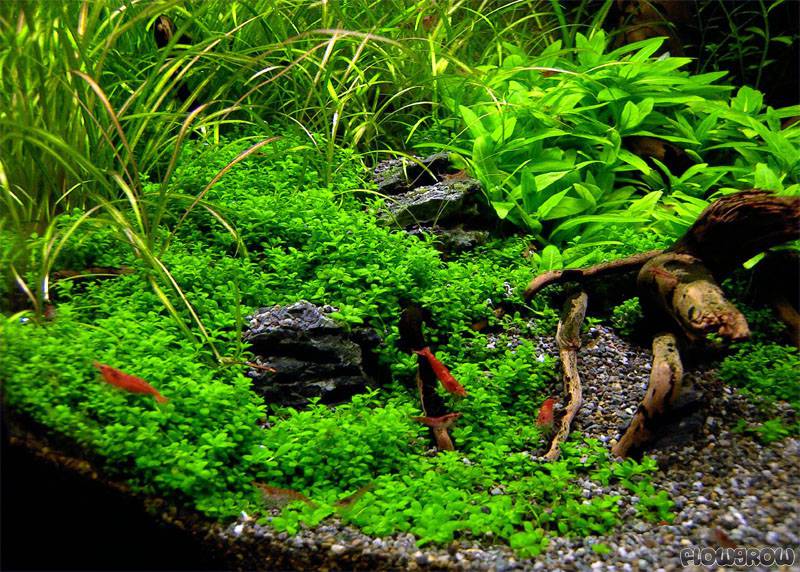
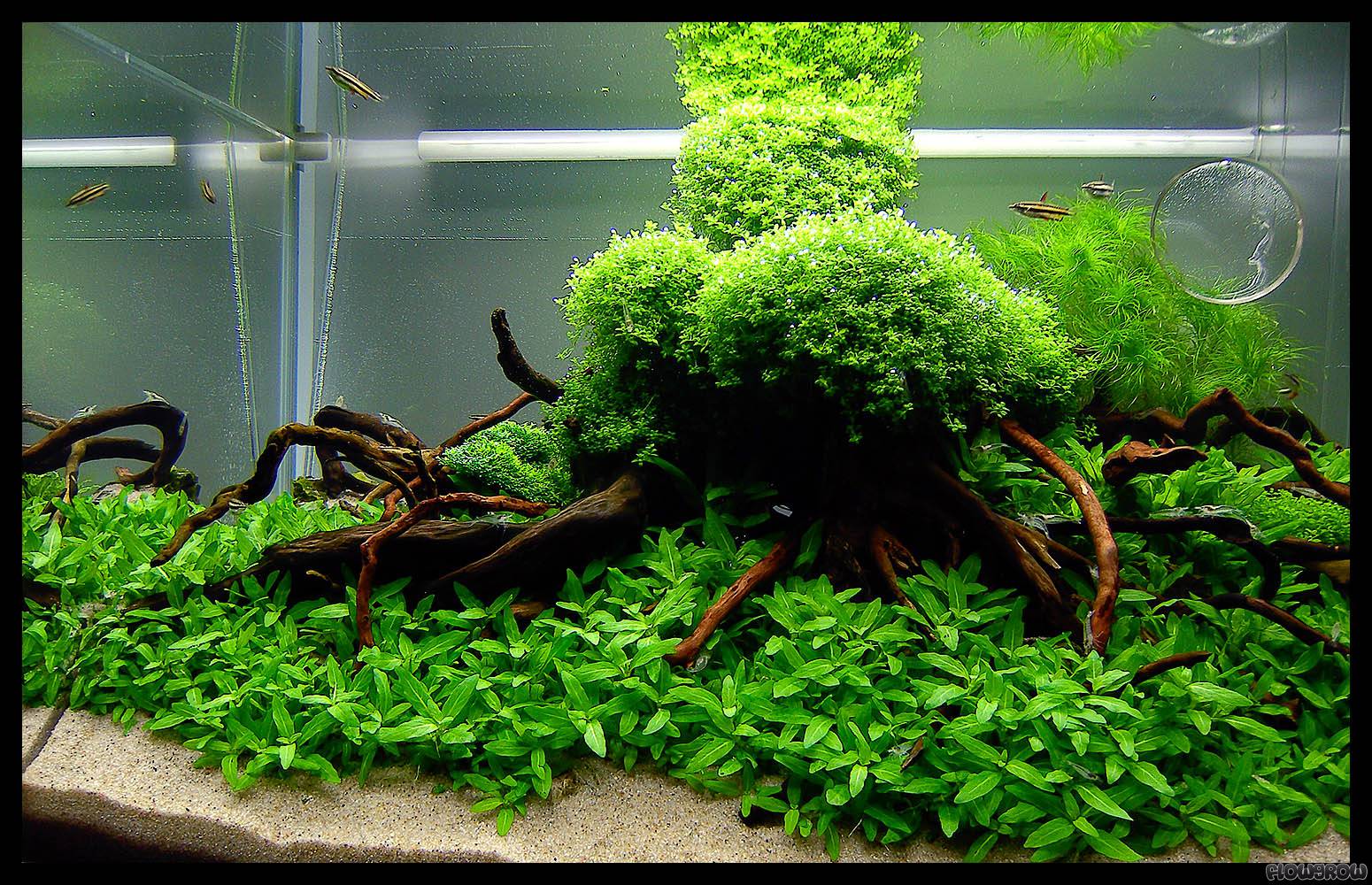
Owing to its relatively low demands and its wonderful appearance, Cuban pearlweed is an attractive, recommendable aquarium plant. It is suitable not only as a carpet in the aquarium foreground, but also looks good when placed between stones in "mountainous" layouts, where it is then reminiscent of alpine cushion plants. It can even be fixed to driftwood, where it forms large light green cushions with hanging shoots. This tiny plant is made for nano tanks.
Because Hemianthus callitrichoides grows very well emersed or semi-emersed, it can, e.g. in open aquariums, be settled along the waterline on driftwood or rocks that protrude from the water.
<a href="https://www.flowgrow.de/db/aquaticplants/hemianthus-callitrichoides-cuba" target="_blank"><img alt="Hemianthus callitrichoides "Cuba"" title="Hemianthus callitrichoides "Cuba"" src="https://www.flowgrow.de/db/widget/aquaticplants/hemianthus-callitrichoides-cuba" /></a>
[url=https://www.flowgrow.de/db/aquaticplants/hemianthus-callitrichoides-cuba][img]https://www.flowgrow.de/db/widget/aquaticplants/hemianthus-callitrichoides-cuba[/img][/url]
[widget=aquaticplants/hemianthus-callitrichoides-cuba]Hemianthus callitrichoides "Cuba"[/widget]