


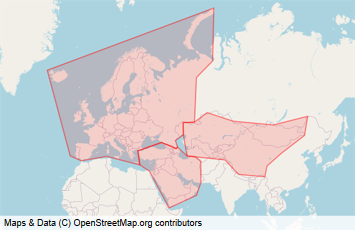

Hedge hyssop, Gratiola officinalis, is a marsh plant widespread in Europe that also occurs in Western and Central Asia. It colonises various wet, temporarily flooded sites, especially those disturbed by flooding or grazing animals and with partly open soil, such as reed beds, lake shores, wet meadows and ponds that periodically dry out. In Germany, G. officinalis is under special protection according to the Federal Species Protection Ordinance (Bundesartenschutzverordnung) and therefore must not be collected in the wild. Hedge hyssop is, however, propagated in nurseries and is available commercially as a garden pond plant. Gratiola officinalis is an old medicinal plant but, because of its glycoside content, is highly poisonous and is therefore no longer used in conventional medicine.
Only this one Gratiola species occurs in Germany, but worldwide there are about 20-30 species, from the temperate zone to the tropics.
The name Gratiola officinalis is not unknown in the aquarium plant trade, because it has apparently been used erroneously for Limnophila hippuridoides.
True G. officinalis, on the other hand, has so far been unknown as an aquarium plant, perhaps because at its natural sites it is mostly found not under water but as a marsh plant standing on wet soil or in shallow water, and therefore seemed uninteresting for aquaristics. According to information from Stephan Mönninghoff, who has been keeping the plant in an aquarium on a trial basis since 2011, it is nevertheless suitable as a permanent aquarium plant.
In previous years, US hobbyists had already successfully tested several North American species such as Gratiola aurea, G. virginiana and G. viscidula for aquarium suitability. Perhaps further species among the relatively many Gratiola species, including some from other continents, would also be suitable for submersed cultivation.
The underwater form of G. officinalis differs considerably from the land form. Whereas the latter has quite narrow, tapering leaves, the submersed shoots, with their thick stems and rounded leaf tips, look quite similar to a Bacopa.
- To be continued -
<a href="https://www.flowgrow.de/db/aquaticplants/gratiola-officinalis" target="_blank"><img alt="Gratiola officinalis" title="Gratiola officinalis" src="https://www.flowgrow.de/db/widget/aquaticplants/gratiola-officinalis" /></a>
[url=https://www.flowgrow.de/db/aquaticplants/gratiola-officinalis][img]https://www.flowgrow.de/db/widget/aquaticplants/gratiola-officinalis[/img][/url]
[widget=aquaticplants/gratiola-officinalis]Gratiola officinalis[/widget]
