
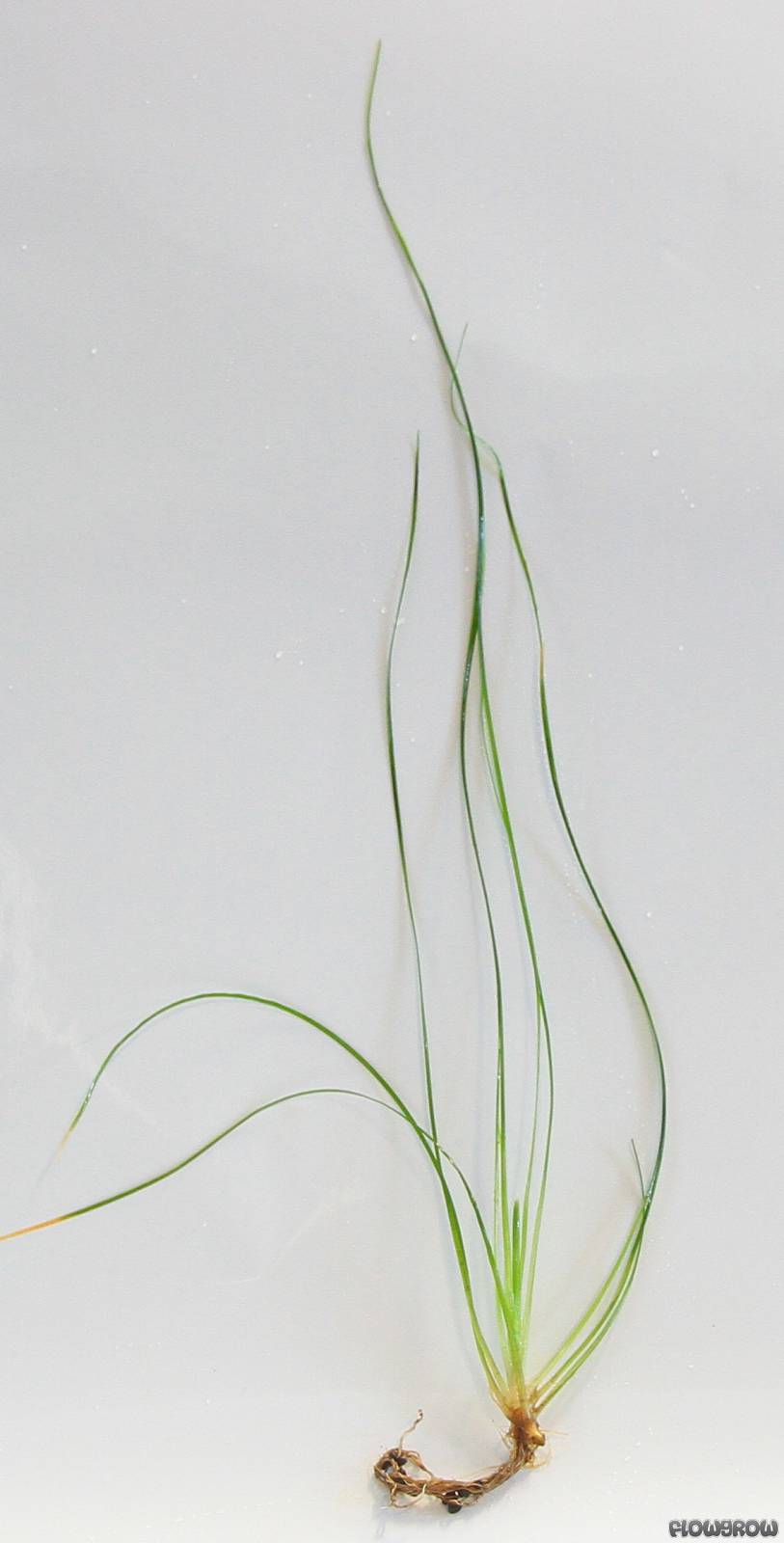
This grass-like plant was introduced to Italy by Massimo Iannella in 2010. He received it from a dealer under the name Eriocaulon sp. 'from Japan', without any further information. Since plants that look distinctly different are also given very similar names, he chose the name Eriocaulon sp. "Japan Needle Leaf", under which the plant also found its way to other hobbyists in Europe.
As M. Iannella emphasises, the assignment to the genus Eriocaulon is only provisional and uncertain. The plant has leaves arranged distichously (in two rows) on the rhizome, which is unusual for the family Eriocaulaceae. In 2012 it produced head-like inflorescences with tiny, whitish flowers at the company Aquasabi (Germany), as is typical of the family Eriocaulaceae. Nevertheless, it is not clear whether it really belongs to Eriocaulon or to another genus after all, because the flowers have not yet been examined in more detail.
The trade name "From Japan" is no reliable evidence that the plant occurs wild in Japan. There are other aquarium plants with a corresponding name that most probably do not originally come from Japan or Asia, such as Bacopa sp. "Japan". In Asia, only Eriocaulon species are known to grow wild from the family Eriocaulaceae. Other genera of this family (Mesanthemum, Leiothrix, Syngonanthus etc.) occur only outside Asia (and Australia), mainly in South America and Africa.
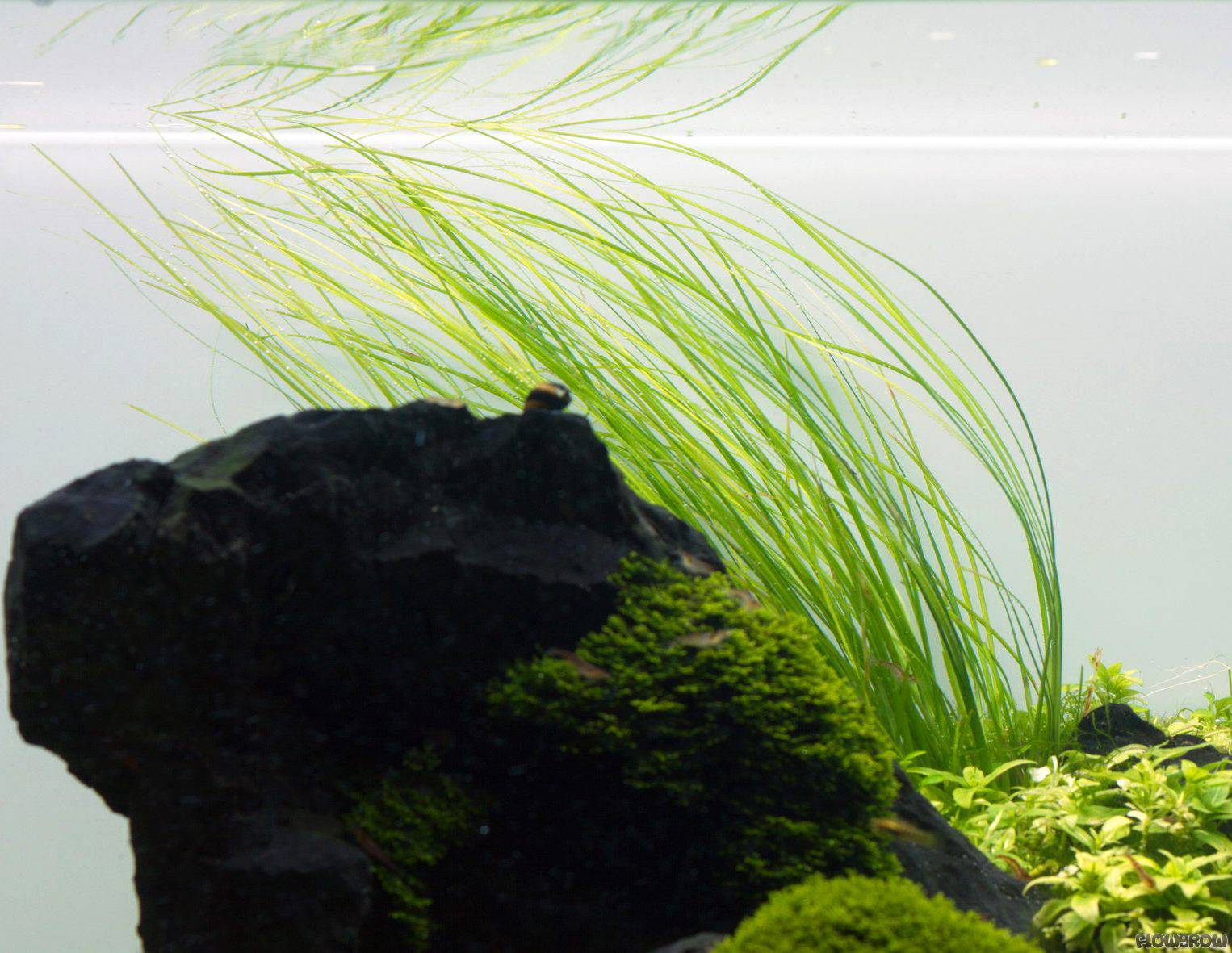
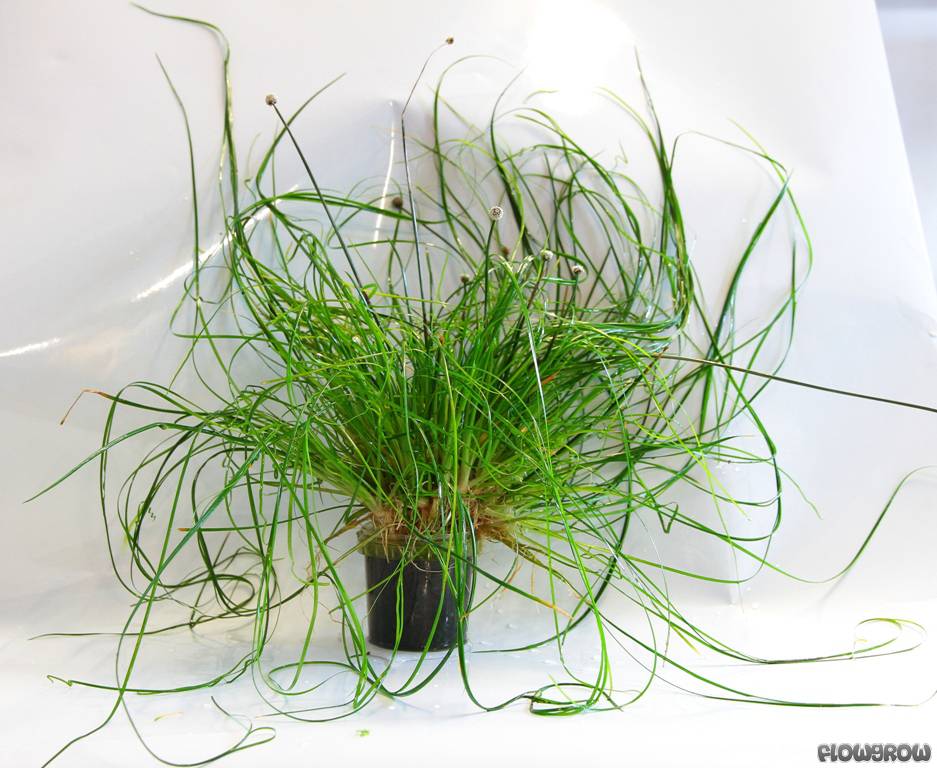
The compact to elongated, hard rhizome grows creeping to ascending and branches strongly. As mentioned above, the leaves sit distichously on the rhizome, similar to what is known from sweet flag (Acorus) or irises (Iris). Over time, the branching produces a dense, tussock-like clump with many daughter plants. The flexible, medium to dark green, smooth submersed leaves grow up to about 40 cm long and only 1.5 mm wide, with a leaf sheath approx. 7 cm long at the base. Occasionally young leaves get stuck as they emerge and then become "crinkled".
The inflorescences are shorter than the leaves. If they stay under water at a high water level, plantlets (adventitious plants) develop at the flower head. If the water is shallow enough (up to approx. 20 cm deep), the inflorescences grow out of the water while the leaves remain under water. When the involucral bracts of the flower heads open, many tiny greyish-white flowers appear, as in other pipeworts (Eriocaulaceae).
Whether this plant can grow emersed in the long term is still unknown. Its long, limp leaves suggest that at the (unknown) natural localities it grows predominantly under water, possibly in fast-flowing waters.
Eriocaulon sp. "Japan Needle Leaf" apparently grows very well in soft, CO2-rich water and nutrient-rich, acidic substrate (aquasoil) at approx. 21-26 °C. But the plant has also already been cultivated successfully at medium carbonate hardness. It has not yet been tested at permanently higher or lower temperatures, in weak light and/or at low CO2 concentration. So far, however, hardly any problems have occurred in cultivation, which is why the difficulty level is given here as "easy".
Well-growing, older plants regularly form inflorescences at the shoot tips. Unlike with some other Eriocaulon species, one need not fear that the plant dies after flowering; it continues its growth by side shoots. If one finds the inflorescences visually disturbing, they can be cut off at the base with sharp scissors.
The plant is easier to propagate vegetatively than many other Eriocaulon species. Side shoots can easily be cut off or carefully broken off the rhizomes. Young plants that develop on submersed inflorescences can be cut off together with the flower head and planted if one has the impression that they have become strong enough. Whether germinable seeds develop in cultivation on emersed inflorescences is not known to us.
As far as we know, no attempt has yet been made to cultivate Eriocaulon sp. "Japan Needle Leaf" fully emersed.
Eriocaulon sp. "Japan Needle Leaf" is an interesting discovery for aquascaping and should be tested under various aquarium conditions and for different design purposes.
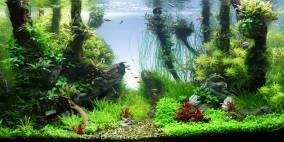
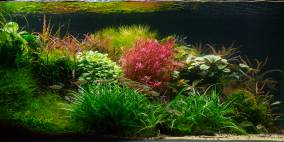
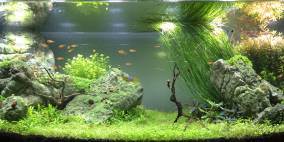
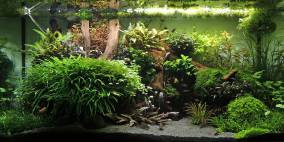
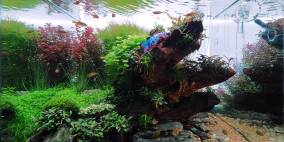
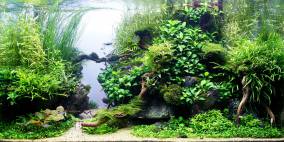
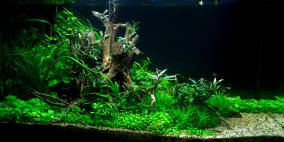
This plant looks distinctly different from the many smaller Eriocaulon forms, which in the aquarium hobby tend to play the role of exotic-looking rarities. With its grass-like habit, it can rather be compared with long- and narrow-leaved rosette plants such as Vallisneria nana or Helanthium bolivianum "Angustifolius", and also used like them. Unlike the species mentioned, Eriocaulon sp. "Japan Needle Leaf" offers the great advantage of not running rampant with runners. The plant can therefore also be used well as a solitary bush, comparable to the lighter green, broader-leaved Cyperus helferi.
<a href="https://www.flowgrow.de/db/aquaticplants/eriocaulon-sp-japan-needle-leaf" target="_blank"><img alt="Eriocaulon sp. "Japan Needle Leaf"" title="Eriocaulon sp. "Japan Needle Leaf"" src="https://www.flowgrow.de/db/widget/aquaticplants/eriocaulon-sp-japan-needle-leaf" /></a>
[url=https://www.flowgrow.de/db/aquaticplants/eriocaulon-sp-japan-needle-leaf][img]https://www.flowgrow.de/db/widget/aquaticplants/eriocaulon-sp-japan-needle-leaf[/img][/url]
[widget=aquaticplants/eriocaulon-sp-japan-needle-leaf]Eriocaulon sp. "Japan Needle Leaf"[/widget]