
The exact species of "Giant Hairgrass" has not been identified yet. This plant was brought onto the market in Germany in the 1990s as "Heleocharis xingu". At the moment, only very few aquatic plant nurseries and dealers carry it, which makes it pretty much of a rarity. Its trade name suggests that it was collected somewhere around Rio Xingú in Brazil, however, there is no reliable information as to its exact origins. It might be identical with the aquarium known as Eleocharis montevidensis in the USA.
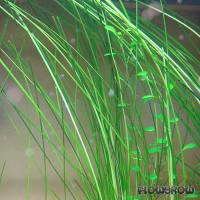
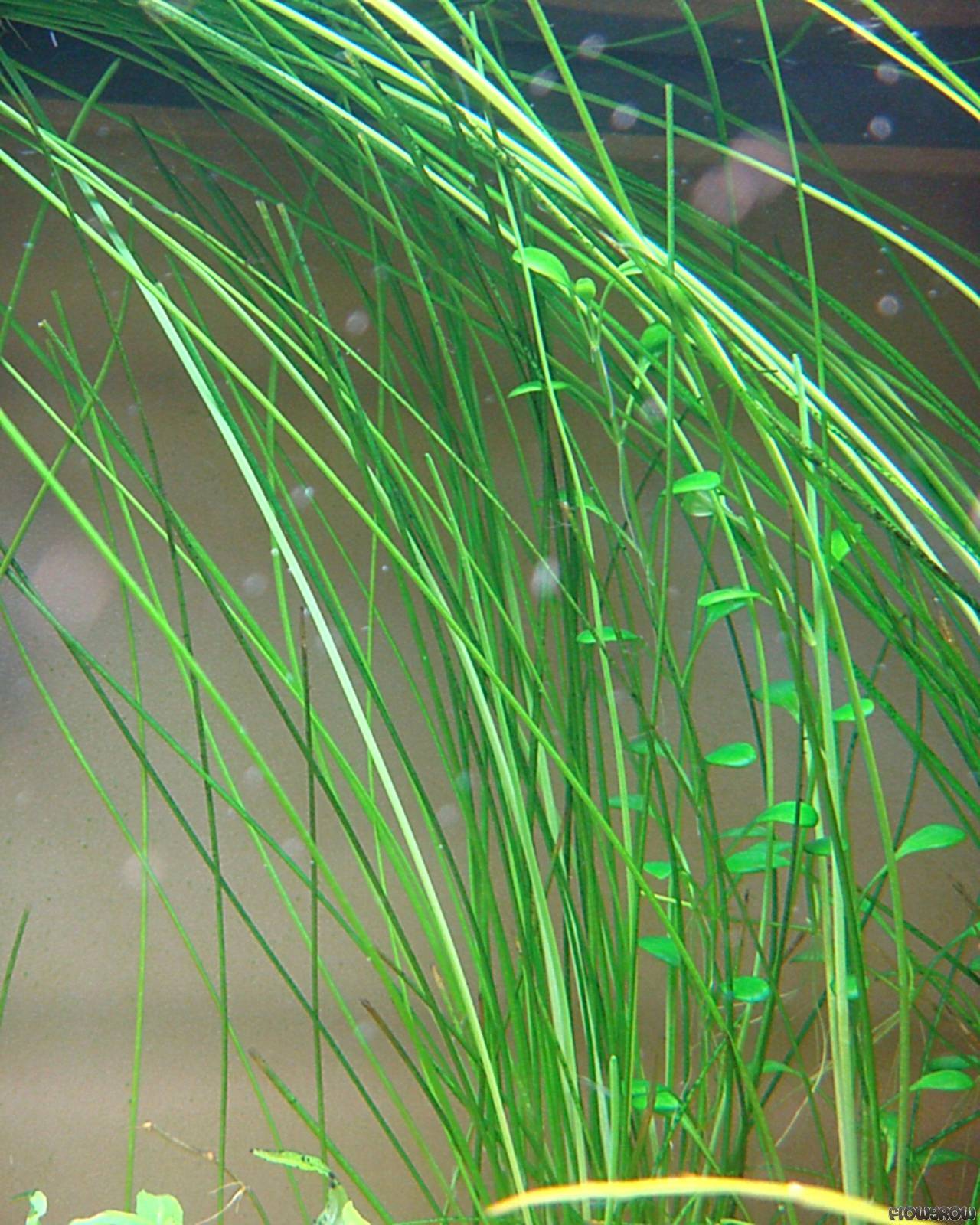
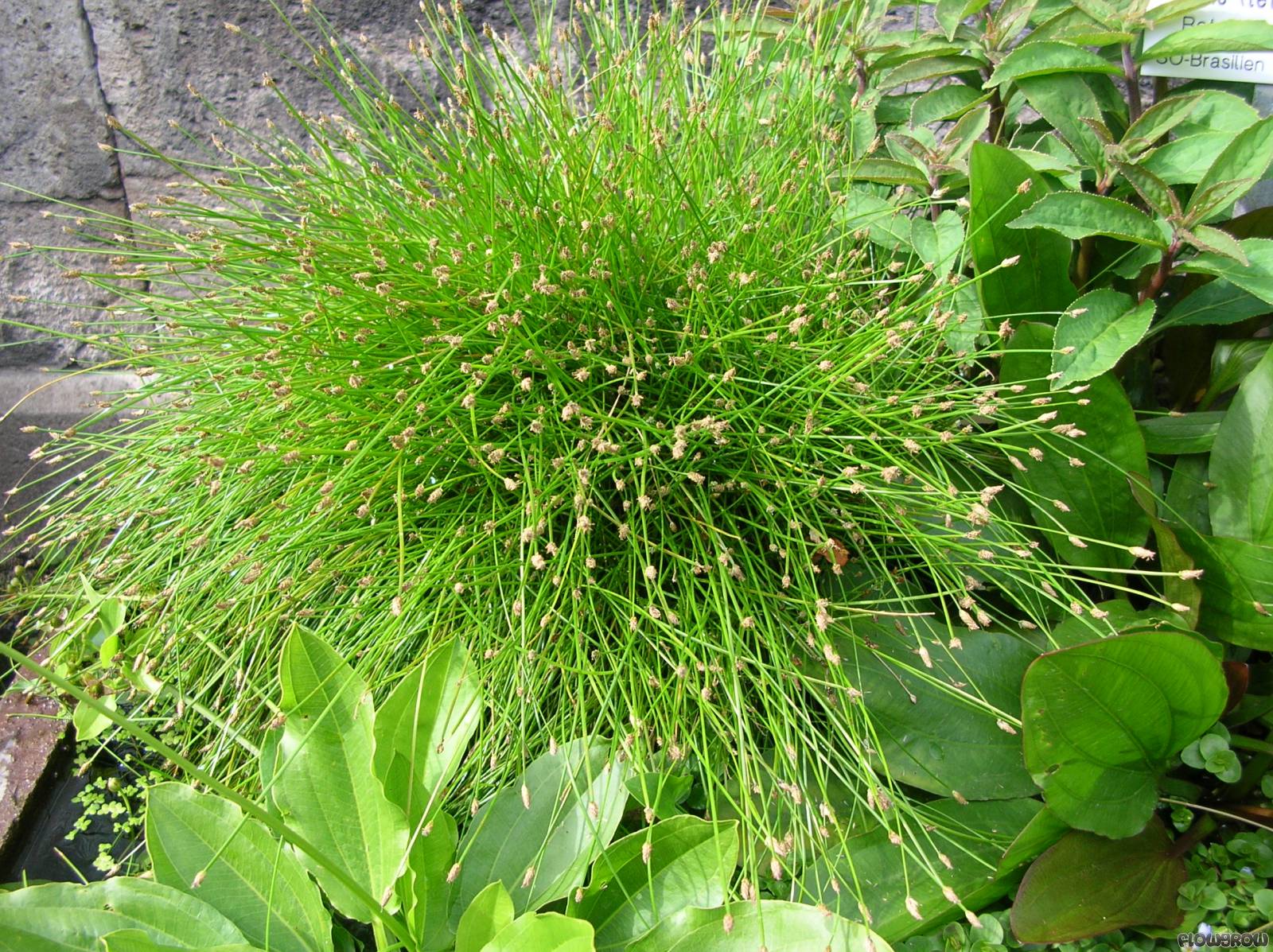
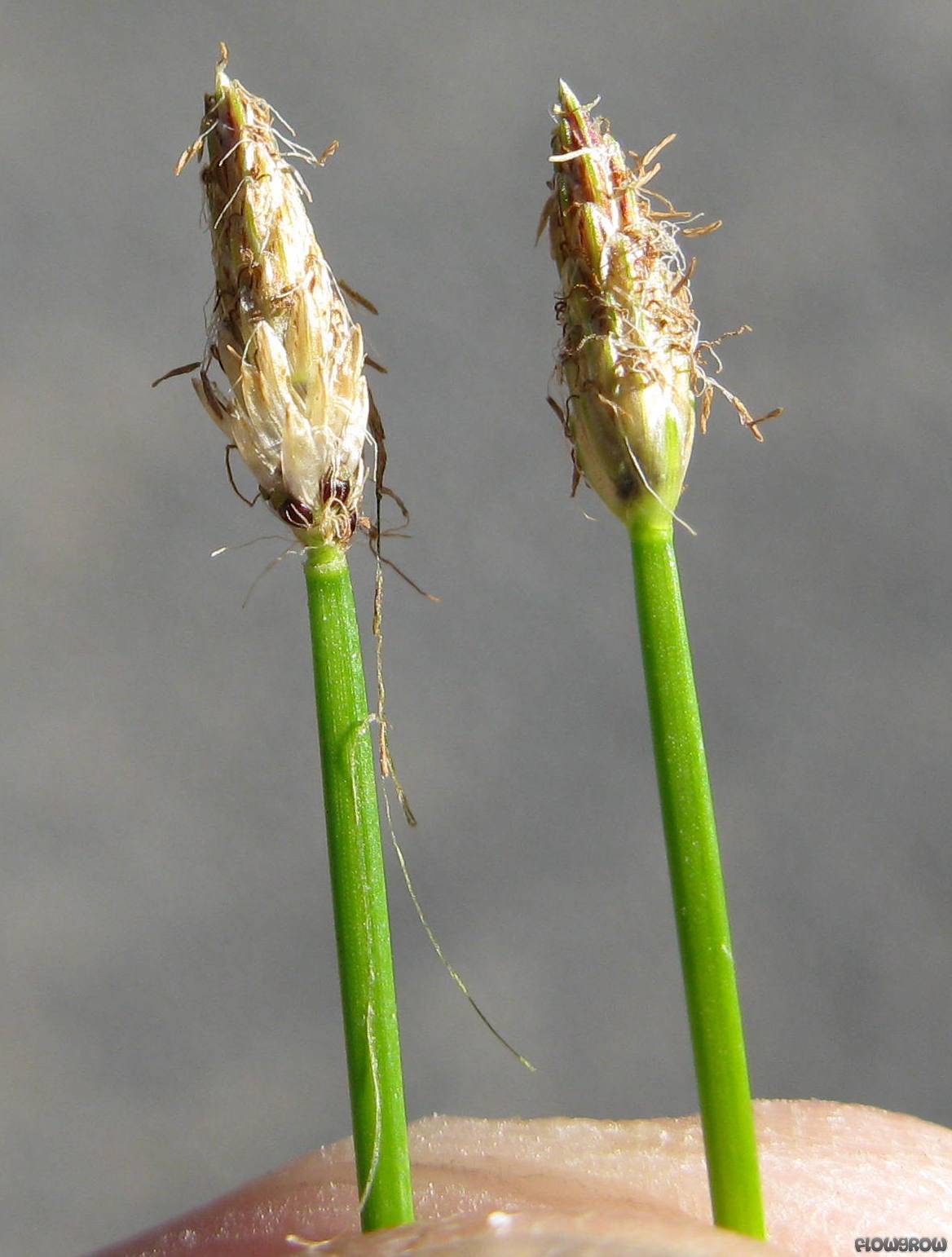
The light to medium green smooth blades of Eleocharis sp. "Xingú" grow to a length of over 20 cm in the emersed form, and submersed they can get over 50 (-60) cm long. They are around 1 millimetre wide, their cross section is oval flattened. Other than tall hairgrass (E. vivipara), E. sp. "Xingú" does not form plantlets on the blade tips. At the end of emersed or semi-emersed blades, longish-ovate, acuminate, light green or greenish-brown ears that are around 5 x 2.5 mm in size.
Eleocharis sp. "Xingú" may be overall considerably larger than standard hairgrass (E. acicularis), but its growth habit is the same. It develops blades growing in tufts as well as subterranean runner-like rhizomes with indivudual blades forming on each node.
Good growth can be achieved with intensive light, CO2 injection, a substrate rich in nutrients and soft water. However, little is known about other conditions this plant can tolerate. Newly planted E. sp. "Xingú" formerly kept emersed might need quite some time to adapt to the new conditions in the aquarium and to begin growing again.
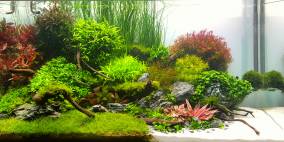
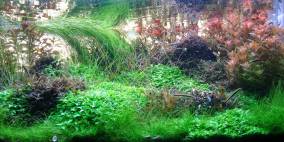
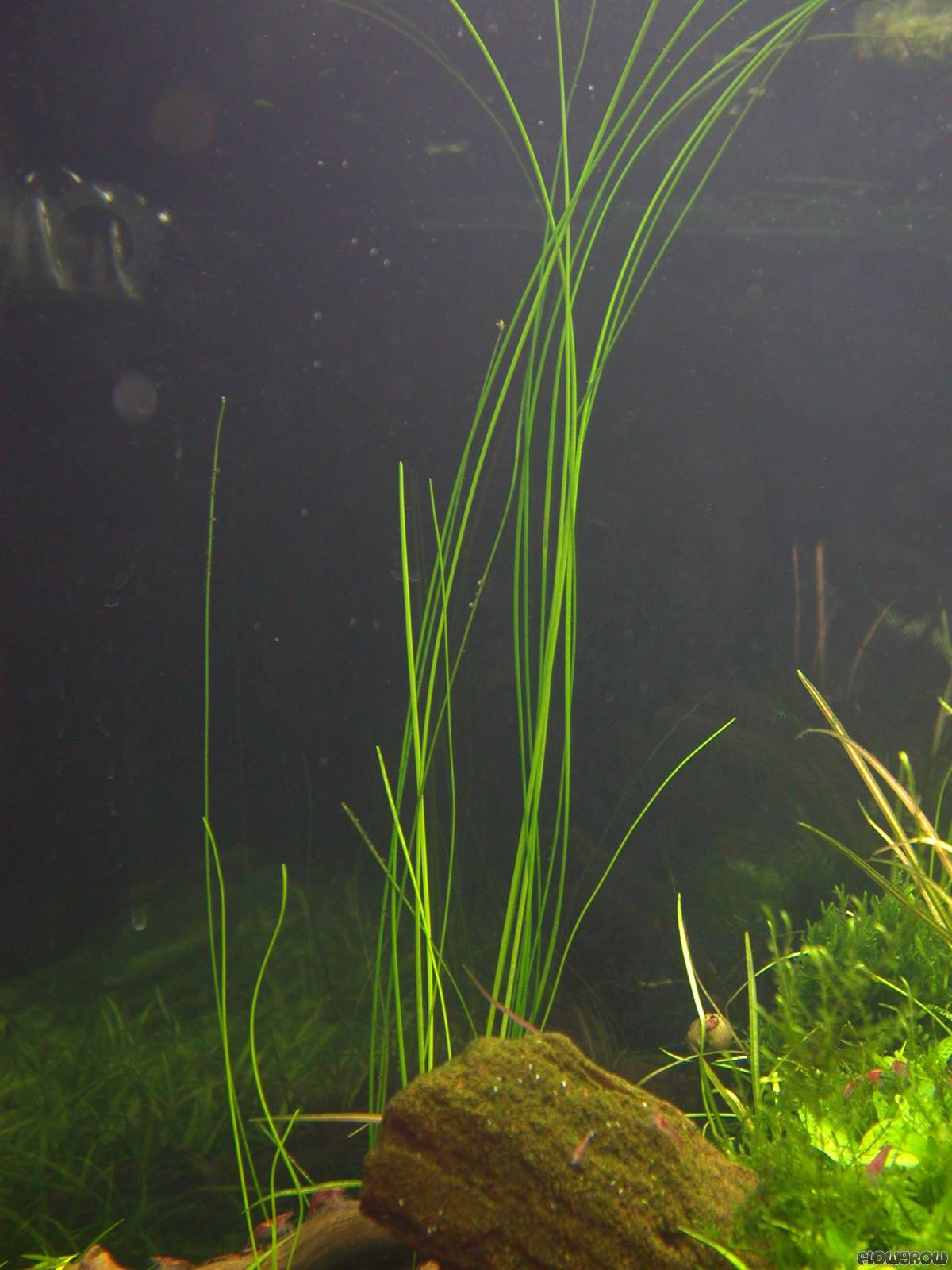
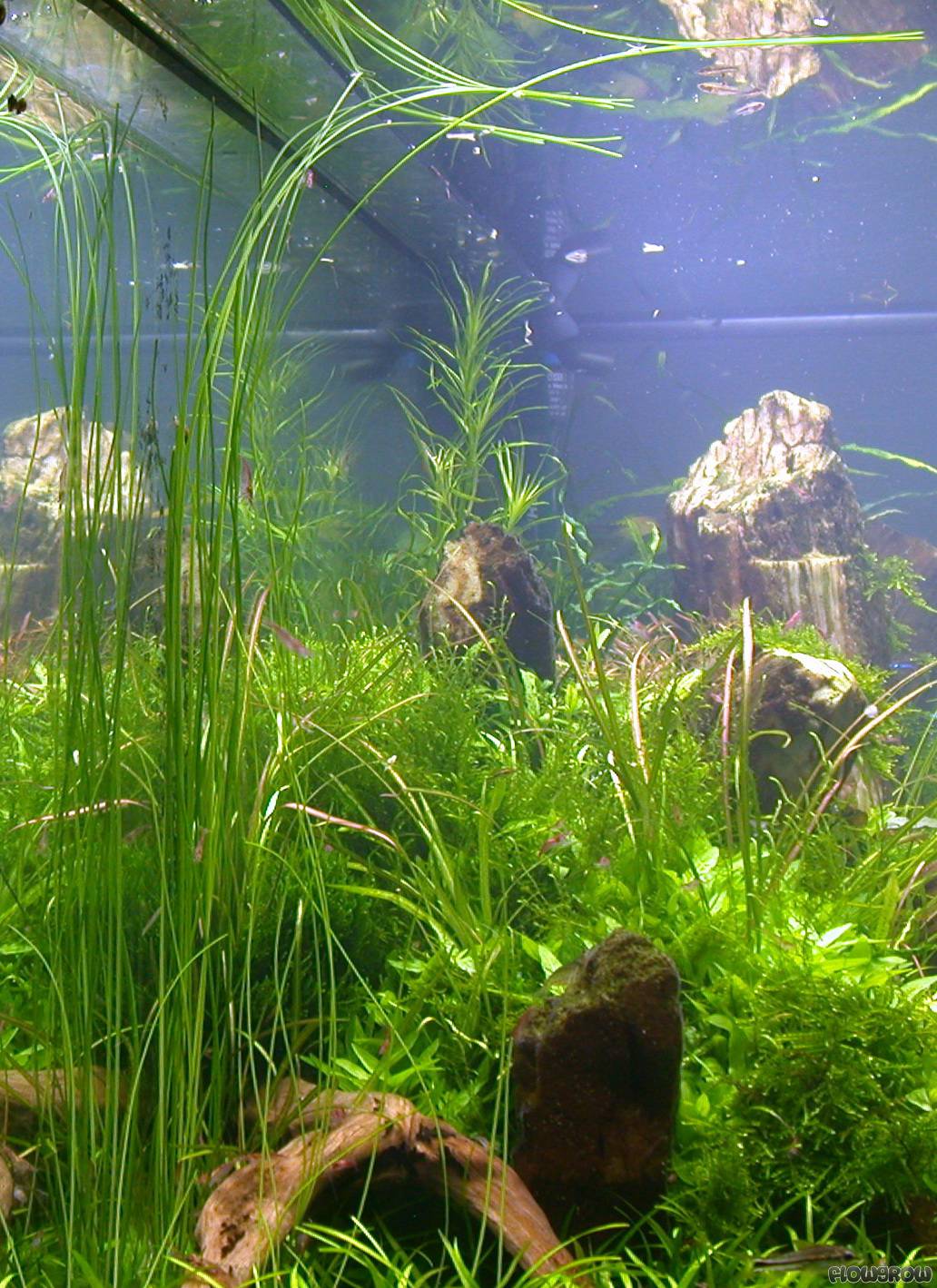
This hairgrass is an interesting aquascaping plant, as it grows high but has relatively fine blades and a grasslike appearance. In high tanks it may be a stronger-looking alternative to E. vivipara, especially if the overall tank design is disturbed by the formation of plantlets on the tips of the blades. Individual younger E. sp. "Xingú" add an elegant look, whereas larger groups in the background of a tank or in a corner may remind the onlooker of reeds at the water's edge or of flooded grassland. Young, newly sprouting blades are of a lighter green than older ones and thus stress the natural aspect of this hairgrass.
Its blades tend to grow over the waterline even in high tanks. When allowed to do that they often develop a bend and float on the waterline. This can be a problem during waterchange, as they do so easily.
Emersed cultivation is rather easy in wet, nutrient-rich substrates and under lots of light. Eleocharis sp. "Xingú" can also be cultivated outdoors during the warm season, where it forms dense, spreading tufts. This hairgrass easily self-propagates by seed. The tiny black nutlets spread when the ripe ears on the blade tips disintegrate. They can be collected for sowing beforehand, however.
Good growth has been achieved with high light intensity, CO2 fertilisation, nutrient-rich substrate and soft water. However, little is yet known about which other conditions this plant tolerates. Newly planted emersed E. sp. "Xingú" may need some time to acclimatise and to begin growing. As is known from Eleocharis acicularis, the giant needle spikerush also spreads by underground rhizomes, which if necessary have to be removed or contained where they are a nuisance.
When Eleocharis sp. "Xingú" grows well, the culms tend to grow out of the water even in tall tanks and then fall over and float at the surface. During a water change it can easily happen that the long culms break.
Emersed cultivation is quite easy in wet, nutrient-rich substrate and with plenty of light. Eleocharis sp. "Xingú" can be cultivated outdoors well during the summer months and then forms dense, spreading clumps of culms. This spikerush self-seeds easily. The tiny black nutlets are scattered when the ripe spikelets at the tips of the culms disintegrate. For targeted sowing they can, however, be harvested beforehand.
As a tall-growing but relatively fine-stalked grass-like plant, this spike rush offers interesting possibilities for aquascaping. In tall tanks it can be used as a sturdier alternative to Eleocharis vivipara. Eleocharis sp. "Xingú" has the advantage over the umbrella spike rush that no plantlets develop at the tips of the stalks which detach and drift around the tank. One must note, however, that the giant needle spike rush grows taller than E. vivipara and the long stalks mostly float at the surface.
Single, younger plants can look quite elegant. Larger stands in the background or an aquarium corner are reminiscent of a bank reed bed or flooded grassland. Young, emerging stalks are a lighter green than the older ones and with this accent underline the natural effect of this spike rush.
In the emersed form Eleocharis sp. "Xingú" might perhaps be of interest for paludariums and wabi-kusa designs.
<a href="https://www.flowgrow.de/db/aquaticplants/eleocharis-sp-xingu" target="_blank"><img alt="Eleocharis sp. "Xingu"" title="Eleocharis sp. "Xingu"" src="https://www.flowgrow.de/db/widget/aquaticplants/eleocharis-sp-xingu" /></a>
[url=https://www.flowgrow.de/db/aquaticplants/eleocharis-sp-xingu][img]https://www.flowgrow.de/db/widget/aquaticplants/eleocharis-sp-xingu[/img][/url]
[widget=aquaticplants/eleocharis-sp-xingu]Eleocharis sp. "Xingu"[/widget]