


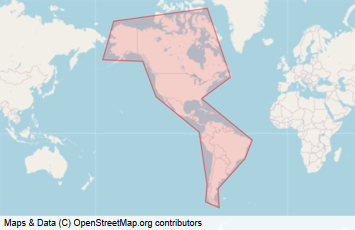
 Range and localities [?]:
exact origin of the cultivated plants unknown

The denomination Echinodorus macrophyllus is ambiguous, in aquaristics as well as in science, as several different plants are known under that name.
E. macrophyllus sensu stricto is only known from a few locations in the coastal parts of southern Brazil. Those plants found in trade under that name should probably be assigned to another species, some of them seem to belong to a variety of E. cordifolius.
Also known as E. "radicans", the plant sold as E. "macrophyllus" is one of the large-growing, wide-leaved sword plants that soon develop emersed leaves even in large aquaria. When kept under short-day conditions (uninterrupted dark nocturnal phase of at least 13 hours) they may grow submersed for a longer period of time. However, this Echinodorus is primarily suitable as decorative emersed plant in open tanks or in large paludaria. Its large roundish, deep-cut heart-shaped leaves on their long stalks reach far above the waterline. In order to prevent them from wilting in the dry indoor air it is recommendable to spray them with water regularly.
Under good growing conditions, the plant will sprout ramified overhanging flower stalks with relatively large white flowers and a great number of adventitious plants that can be used for propagation.
The plants cultivated under the name Echinodorus macrophyllus are among the large-growing, broad-leaved sword plants. Just like E. cordifolius, under good growing conditions they soon form long-stalked floating and aerial leaves and then grow out of the water as emersed plants. Under short-day conditions (an uninterrupted dark period at night of at least 13 hours) it may be easier to keep the plant in the submersed form for a longer time. But primarily this Echinodorus is suited as a decorative emersed plant in open aquariums or in spacious paludariums. The large, roundish, deeply heart-shaped, long-stalked leaves project far above the water surface. Regular spraying of the leaves is recommended so that they do not dry out in indoor air that is too dry.
With good growth the branched, overhanging inflorescences also appear, on which relatively large white flowers as well as many adventitious plants develop, by which the plant can be propagated.
<a href="https://www.flowgrow.de/db/aquaticplants/echinodorus-sp-macrophyllus" target="_blank"><img alt="Echinodorus sp. "macrophyllus"" title="Echinodorus sp. "macrophyllus"" src="https://www.flowgrow.de/db/widget/aquaticplants/echinodorus-sp-macrophyllus" /></a>
[url=https://www.flowgrow.de/db/aquaticplants/echinodorus-sp-macrophyllus][img]https://www.flowgrow.de/db/widget/aquaticplants/echinodorus-sp-macrophyllus[/img][/url]
[widget=aquaticplants/echinodorus-sp-macrophyllus]Echinodorus sp. "macrophyllus"[/widget]
