


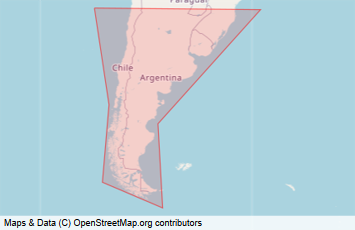
 Range and localities [?]:
Southeastern Brazil: Rio Grande do Sul and Santa Catarina
Echinodorus portoalegrensis comes from south-eastern Brazil and was found in rapidly flowing, cool rivers. A well-known locality is the Rio Peixe in the state of Santa Catarina. The plant was described as a species by Karel Rataj in 1970 and named after the city of Porto Alegre (Rio Grande do Sul). It is very similar to Echinodorus opacus, which also occurs as an aquatic plant in rivers of south-eastern Brazil.
The robust sword plant also has in common with E. opacus that it has long been known as an aquarium plant but has never been common. This rarity is not available from specialist retailers, which is certainly due to its slow growth. With a little luck it can still be obtained from some aquarists.
Echinodorus portoalegrensis was synonymised with Echinodorus uruguayensis by Haynes & Holm-Nielsen. However, Lehtonen & Falck (2011) demonstrated by DNA analyses that E. portoalegrensis is a natural hybrid descended from plants related to E. grandiflorus and E. longiscapus. It had long been suspected that this plant is not a “good” species, because it is tri- or tetraploid (i.e. it has a triple or quadruple set of chromosomes). E. opacus too is probably a natural hybrid of parents from the E. grandiflorus relationship.
Echinodorus portoalegrensis has a cylindrical, creeping rhizome and very tough, rigid, dark green, slightly translucent leaves. The robust sword plant differs from E. opacus in its narrower leaf shape (narrowly elliptic to lanceolate or oblanceolate) and its more spreading habit with slightly downward-curved leaves. The leaf rosette can reach a width of approx. 30 cm.
- To be continued -
<a href="https://www.flowgrow.de/db/aquaticplants/echinodorus-portoalegrensis" target="_blank"><img alt="Echinodorus portoalegrensis" title="Echinodorus portoalegrensis" src="https://www.flowgrow.de/db/widget/aquaticplants/echinodorus-portoalegrensis" /></a>
[url=https://www.flowgrow.de/db/aquaticplants/echinodorus-portoalegrensis][img]https://www.flowgrow.de/db/widget/aquaticplants/echinodorus-portoalegrensis[/img][/url]
[widget=aquaticplants/echinodorus-portoalegrensis]Echinodorus portoalegrensis[/widget]
