 Range and localities [?]:
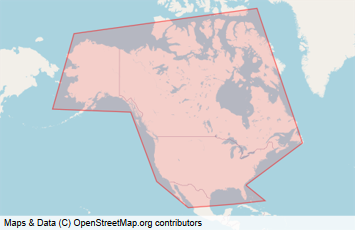
Eastern USA and Canada


Penthorum sedoides is an upright perennial about 30 to 60 cm tall, which is distributed in eastern North America from Canada to the southern US states. It grows as a terrestrial or marsh plant in wet places such as banks and ditches. Sometimes, however, it can also be found temporarily submersed in shallow water in the wild.
Only a few years ago, aquarists in the USA found out that P. sedoides is suitable as a submersed aquarium plant. In Europe this species has occasionally been available for some time as a marsh plant for garden pond margins, and it is also cultivated in botanical gardens. In the aquarium hobby, however, it is still hardly known here at present (2014). The company Tropica (Denmark) has already added P. sedoides to its range of aquarium plants.
Although Penthorum sedoides is called “Sumpfdickblatt” (“marsh thick-leaf”) in German and “ditch stonecrop” in English, it is not a thick-leaved (succulent) plant. The leaves of the emersed plant are arranged alternately on the stem, elliptic-lanceolate to inversely lanceolate, taper to a point and have a serrated margin. The small cream-coloured, greenish to reddish flowers appear in high and late summer in several spreading spikes at the tip of the stem. The plant is hardy in outdoor cultivation and sows itself easily. It has an attractive pink to red autumn colouration and overwinters with creeping rhizomes in the soil while the upright shoots die back.
The submersed shoots of Penthorum sedoides are smaller, more compact and more densely leaved than the emersed shoots. They grow strictly upright and have a strong stem. The underwater leaves are light green, more or less wavy and, like the emersed leaves, have a lanceolate shape and a serrated leaf margin.
Because of its floral characteristics, the peculiar genus Penthorum has so far mostly been placed in the stonecrop family (Crassulaceae) or the saxifrage family (Saxifragaceae). In recent years, however, DNA analyses have shown that it represents an independent lineage and is probably the sister group of the water-milfoil family (Haloragaceae, e.g. Myriophyllum and Proserpinaca). For this reason Penthorum is now placed in a family of its own (Penthoraceae).3 Only two Penthorum species are known worldwide. The second species, P. chinense, is distributed in East Asia from Mongolia and the Russian Far East to Thailand and Vietnam4 and is traditionally used as a medicinal plant in China. It would certainly be interesting to test this species as an aquarium plant as well and to compare it with the American P. sedoides.
- To be continued -
<a href="https://www.flowgrow.de/db/aquaticplants/penthorum-sedoides" target="_blank"><img alt="Penthorum sedoides" title="Penthorum sedoides" src="https://www.flowgrow.de/db/widget/aquaticplants/penthorum-sedoides" /></a>
[url=https://www.flowgrow.de/db/aquaticplants/penthorum-sedoides][img]https://www.flowgrow.de/db/widget/aquaticplants/penthorum-sedoides[/img][/url]
[widget=aquaticplants/penthorum-sedoides]Penthorum sedoides[/widget]